

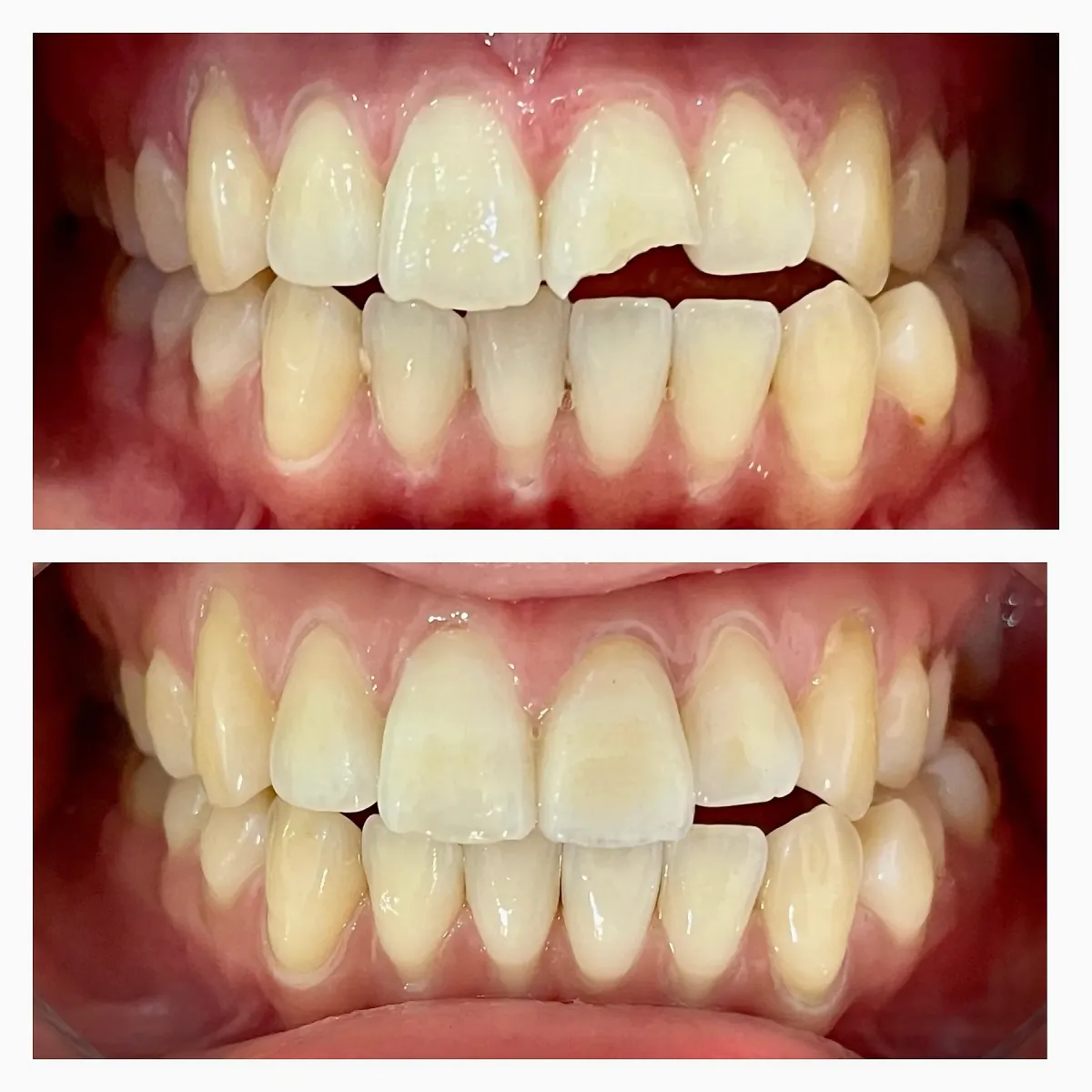
Dental bonding is a tooth-colored composite resin that we shape directly on your tooth to repair a chip, close a small gap or even out an edge. At ConfiDental, most bonding is finished in a single visit, usually with no drilling or only a little, and many patients need no numbing at all. It is one of the most conservative ways to improve a smile, and it leaves your natural enamel almost untouched.
People often come in for one chipped front tooth and leave surprised at how simple the fix was. Others use bonding as a low-commitment way to try a new tooth shape before deciding on porcelain veneers.
What is composite bonding?
Composite is a resin filled with fine glass particles. It comes in dozens of shades and translucencies, so it can be layered to copy the way light passes through enamel. We roughen the surface of the tooth very slightly, apply a bonding agent, then build the resin up by hand in thin layers. Each layer is hardened with a curing light. The last step is shaping and polishing, which is where most of the artistry happens.
Because nothing is made in a lab, there are no impressions, no temporaries and no waiting. You see the result in the mirror before you get up from the chair. It is the same material we use for tooth-colored fillings, applied with a cosmetic goal rather than to treat decay.
What bonding can fix
Bonding works well for:
- Small chips and broken corners on front teeth
- Gaps between teeth, especially a single gap between the two front teeth
- Teeth that are slightly short, worn or uneven at the edges
- Small dark spots or stains that whitening does not lift
- Exposed root surfaces that feel sensitive after gum recession
- Trying out a new shape before committing to veneers
It is less suited to large color changes across many teeth, heavy biting forces on back teeth, or teeth that have lost a lot of structure. In those cases a porcelain crown or veneer is usually the stronger choice, and we will tell you so. If a tooth has broken below the gum, it may need crown lengthening before it can be restored at all.
Are you a good candidate?
You are likely a good fit for bonding if your teeth and gums are healthy, the change you want is modest, and you are happy to look after the result with some care. Any decay or gum inflammation is treated first, because resin bonds best to a clean, healthy tooth.
Grinding matters. If you clench or grind at night, bonded edges can chip. We may suggest a custom night guard to protect the work. If you plan to whiten, do it before bonding. Composite does not change color with bleaching, so we match the resin to your brightened shade.
The bonding procedure, step by step
- Consultation and shade check We look at the tooth, your bite and your smile line, and agree on the shape you want. For larger changes we can mock up the result first.
- Preparation The surface is cleaned and lightly textured. Most of the time this involves no drilling, so anesthetic is often not needed.
- Layering Composite is placed in thin layers in more than one shade, each one cured with a blue light.
- Shaping The resin is sculpted to match the neighboring teeth and checked against your bite.
- Polishing A careful polish gives the surface a natural luster that reflects light like enamel.
Most teeth take about 30 to 60 minutes each. Several teeth can be treated in the same appointment.
Recovery and aftercare
There is no recovery time. You can eat and talk normally as soon as you leave. Some people notice a slightly different feel with their tongue for a day or two, and that passes.
For the first 48 hours it helps to go easy on coffee, tea, red wine and other strongly colored food and drink, since fresh composite can pick up surface stain. After that, normal brushing, flossing and regular cleanings keep it looking good. Avoid biting ice, pens or fingernails with bonded teeth.
How long does bonding last?
With good care, bonding usually lasts about five to ten years before it needs a polish, a touch-up or replacement. Edges can chip and the surface can dull or stain over time, especially for coffee drinkers and smokers. The good news is that repairs are simple: we can add fresh resin to the existing bonding in a short visit.
Dental bonding cost in Beverly Hills
Cosmetic bonding is about $300 to $600 per tooth at our office, depending on size and complexity. You receive a written estimate before any treatment begins.
Insurance rarely covers bonding done for appearance alone. When bonding repairs a broken tooth or covers a sensitive root, part of the cost may be covered. We welcome PPO plans from major insurers and can check your benefits before your visit. Our payment options page explains financing.
Risks and limitations
Bonding is low risk, but it is worth knowing its limits:
- Composite is not as strong or stain resistant as porcelain.
- Edges can chip, particularly on teeth that take heavy bite forces.
- It may need touch-ups every few years.
- Very occasionally a tooth is sensitive for a few days afterward.
Because little or no enamel is removed, bonding is usually reversible. That is one of its biggest advantages.
Bonding compared with other options
- Teeth whitening changes color only. It cannot fix chips or gaps.
- Porcelain veneers last longer and resist stain better, but need lab work, two or three visits and usually some enamel removal.
- Crowns cover the whole tooth and suit teeth that are badly broken or heavily filled.
- Invisalign moves teeth rather than adding material, and is often the better route for gaps caused by crowding or spacing.
Bonding is one part of our cosmetic dentistry in Beverly Hills, and many good results combine treatments, for example whitening first and bonding second. If a tooth has broken suddenly, our guide to fixing a broken tooth explains what to do in the meantime.
Your bonding dentist
Bonding is done by Dr. Liyan Massaband, who has more than 15 years of experience in cosmetic and restorative dentistry. She shapes each tooth by hand and checks it against your face, lip line and bite, so the result looks like your own tooth rather than a patch.
Book a bonding consultation
If a chip, gap or uneven edge bothers you, a short visit is enough to tell whether bonding is the right fit. Book an appointment online or call us, and we will talk through the options and costs before anything is done.