
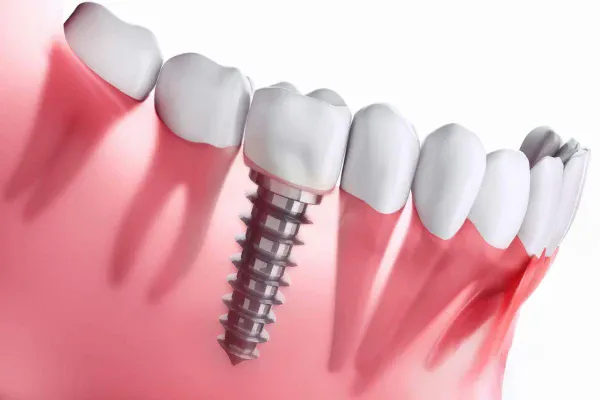

Implant restoration is the stage that turns a healed implant into a tooth you can see, chew with and smile with: the abutment, and the custom crown, bridge or denture that sits on top. At ConfiDental we provide implant restoration in Beverly Hills for implants we place and for implants placed by other dentists, and we repair implant crowns that are loose, chipped or worn. Dr. Liyan Massaband gives you a written cost and timeline before any work begins.
If your implant crown is loose right now, skip to the section on loose crowns below. Most of the time it is a small, fixable problem.
What is implant restoration?
An implant has three parts:
- The implant, a small post in the jawbone that acts as the root.
- The abutment, a connector joining the implant to the tooth.
- The restoration, the crown, bridge or denture you see and chew with.
Restoration covers the abutment and everything above it. It begins once the implant has bonded with the bone, usually three to six months after implant placement. The implant itself can last for decades with good care, but the crown on top takes the wear of daily chewing and may eventually need replacing. That is why careful design and maintenance of this top part matter so much.
New to implants? Our dental implants overview explains the whole process.
Types of implant restorations
| Restoration | What it replaces | Fixed or removable |
|---|---|---|
| Implant crown | One tooth on one implant | Fixed |
| Implant-supported bridge | Several teeth in a row on two or more implants | Fixed |
| Implant overdenture | All teeth in a jaw, snapping onto 2 to 4 implants | Removable for cleaning |
| Full-arch restoration | All teeth in a jaw on 4 to 6 implants | Fixed |
| Provisional restoration | A temporary tooth while the final one is made or the gum settles | Fixed or removable |
For whole-arch options, see implant overdentures and All-on-4.
Implant crown materials
- Zirconia: very strong and metal-free, a good choice for back teeth and people who grind.
- Layered porcelain on zirconia, or lithium disilicate: the most lifelike look for front teeth.
- Porcelain fused to metal: a lower-cost option, though a thin dark edge may show if the gum recedes.
Screw-retained or cement-retained?
A screw-retained crown is held by a small screw through the top, and the access hole is sealed with tooth-colored filling. It can be removed easily for repairs, and there is no cement under the gum.
A cement-retained crown is cemented onto the abutment. It can look slightly better on some front teeth, but any excess cement must be cleaned away meticulously, because cement left under the gum is a known cause of inflammation around implants.
We choose based on the position and angle of your implant, and explain why.
Restoring an implant placed by another dentist
Many patients had an implant placed elsewhere, then moved or lost touch with the original office. We can usually restore it. What helps:
- Any records you have: the implant brand, size, X-rays or an implant card
- The name of the office that placed it, so we can request records
If records are missing, we can often identify the system from X-rays and the internal connection, and order genuine or compatible parts accordingly. If you are visiting from out of town, we can group visits to cut down on trips.
Your implant restoration in Beverly Hills, step by step
- Check the implant An exam and X-rays confirm the implant is solid, the bone is stable and the gum around it is healthy.
- Digital scan A scan records the exact position of the implant, your bite and the shape of the gum. For front teeth, a custom abutment helps the gum frame the crown naturally.
- Design and shade The crown is designed to match neighboring teeth in color, shape and size.
- Provisional, if needed A temporary crown can shape the gum and let you test the look, especially at the front.
- Fitting The final crown is tried in, the bite and contacts are checked, and it is screwed or cemented in place. This visit often takes 30 to 60 minutes.
- Follow-up We recheck the bite and gum shortly afterward and then at your regular cleanings.
Once the implant has healed, a single crown usually takes two visits over one to two weeks. Because an implant has no nerve, fitting the crown is usually comfortable, sometimes with a little anesthetic for the gum.
Loose or broken implant crown: what it usually means
| What you notice | Common cause | Usual fix |
|---|---|---|
| Crown wiggles but the gum is calm | Loose abutment screw | Remove crown, replace or tighten the screw |
| Crown came off in one piece | Cement has washed out | Clean and recement, if the crown is intact |
| Porcelain chipped | Biting force or grinding | Polish, repair or replace the crown; consider a night guard |
| Gum sore, bleeding or swollen around the implant | Inflammation around the implant | Cleaning around the implant, sometimes laser gum therapy |
| The whole implant moves, or X-rays show bone loss | A problem with the implant itself | Assessment for revision; see implant complications |
If your implant crown is loose:
- Call us promptly. Chewing on a loose crown can bend or break the screw and damage the connection inside the implant.
- If it comes off, keep it and bring it with you.
- Do not glue it back yourself.
- Chew on the other side until you are seen.
Swelling, pus, fever or pain around an implant needs to be seen the same day. Early inflammation of the gum around an implant can usually be reversed; once it reaches the bone, treatment is more involved.
Replacing an old implant crown
Implant crowns wear, chip or start to look dated, especially older metal-based crowns with a grey line at the gum. If the implant underneath is healthy, we can replace the crown, and the abutment if needed, without touching the implant itself.
Caring for your implant restoration
- Brush twice a day and clean around the implant daily with floss, a water flosser or a small interdental brush.
- Keep regular cleanings. Implants need professional care just like teeth.
- Wear a night guard if you clench or grind.
- Avoid chewing ice or very hard foods on implant crowns.
- Tell us early if anything feels loose, high or sore.
Implant restoration cost
| Implant restoration | Typical cost |
|---|---|
| Implant restoration assessment with X-rays | From $150 |
| Abutment | $500 to $1,000 |
| Implant crown (zirconia or porcelain) | $1,200 to $2,500 |
| Implant crown (porcelain fused to metal) | Lower end of the crown range |
| Abutment and crown together, one tooth | About $1,700 to $3,500 |
| Recementing an intact crown | From $200 |
| Tightening or replacing an abutment screw | From $150 |
These cover the restoration only. Overdentures and full-arch prostheses on existing implants are quoted individually after an exam. For the full cost including surgery, see our dental implant cost guide. Many plans pay toward an implant crown under the crown benefit; we check yours first, and you can read more in understanding dental insurance. CareCredit financing is also available.
Your dentist
Dr. Liyan Massaband has completed more than 1,500 implant procedures in over 15 years. Because she both places and restores implants, the crown is planned with the implant in mind. When a problem needs a periodontist or oral surgeon, she will say so plainly. Patients come to our Brighton Way office from Century City, Westwood and across the Westside. Call (310) 858-9212 or book an implant crown visit online.