
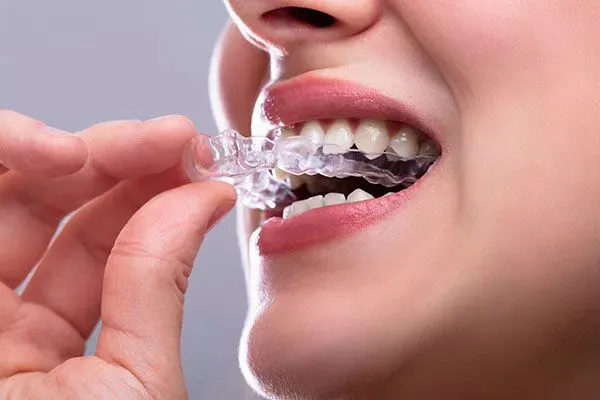

A custom night guard is a thin, precisely fitted appliance you wear while you sleep to protect your teeth from grinding and clenching. At ConfiDental we make teeth night guards in Beverly Hills from digital impressions of your bite, then adjust them in the chair so your jaw can rest in a comfortable, balanced position. If you wake up with a tight jaw, morning headaches or teeth that look shorter than they used to, a night guard is often the simplest place to start.
It will not stop you from grinding, since that is largely driven by the nervous system and sleep. What it does is take the force, so your enamel, fillings and crowns do not.
What grinding does to your teeth
Grinding and clenching during sleep, called sleep bruxism, can generate far more force than normal chewing, and it goes on for minutes at a time without you knowing. Over months and years that can lead to:
- Flattened, chipped or shortened teeth
- Cracks in teeth, fillings and crowns
- Sensitivity as enamel wears thin
- Notches at the gum line
- Sore jaw muscles, tension headaches and jaw joint pain
- Damage to implants and veneers, which do not have the natural cushioning of a living tooth
Stress, caffeine, alcohol, some medications and sleep-disordered breathing can all make it worse. Partners often notice the sound before the grinder does.
Signs you may need a night guard
- You wake with a sore or tired jaw, or a dull headache at the temples
- Your teeth feel sensitive with no obvious cavity
- Your partner hears grinding at night
- Your front teeth look flatter or have small chips at the edges
- You keep breaking fillings or have cracked a tooth
- Your jaw clicks or feels stiff in the morning
At your dental exam, we look for the telltale wear facets, check the muscles and joints and compare against older photos or X-rays if we have them.
Custom guard vs. store-bought guard
| Custom night guard | Boil-and-bite or stock guard | |
|---|---|---|
| Fit | Made from a scan of your teeth, adjusted to your bite | Approximate; often bulky or loose |
| Thickness | Thin and even | Usually thicker to compensate for fit |
| Bite balance | Adjusted so your jaw closes evenly | Not adjusted; can create uneven contacts |
| Durability | Often several years | Often wears through quickly in heavy grinders |
| Comfort for sleep | Most patients adapt within a week or two | Many people stop wearing it |
A poorly fitting guard is not only uncomfortable. If it lets you bite unevenly, it can make jaw symptoms worse. That is the main reason we prefer custom appliances for anyone with real wear or jaw pain.
Types of night guards we make
- Soft guards suit light grinders or people who mainly clench. They are cushioning but wear faster with heavy grinding.
- Hard or hybrid guards combine a rigid outer surface with a softer inner layer. They are more durable and easier to adjust, and are our usual choice for moderate to heavy grinding or for protecting crowns and implants.
Most guards are worn on the upper teeth, though a lower guard sometimes suits a particular bite or a strong gag reflex.
How we make teeth night guards in Beverly Hills
- Exam and bite check Dr. Massaband looks at your wear patterns, jaw muscles and joints, and asks about sleep and symptoms.
- Digital impressions A quick scan of your teeth replaces messy putty trays. It takes about 15 minutes.
- Lab fabrication Your guard is made by a dental lab, typically within 7 to 14 days.
- Fitting We seat the guard, check that it goes in and out easily, and adjust the biting surface so your teeth touch evenly.
- Follow-up After a few weeks of wear we check comfort and make any fine adjustments.
From first visit to fitting usually takes one to three weeks.
Protecting crowns, veneers and implants
If you have invested in cosmetic or restorative work, a night guard is part of looking after it. Porcelain is strong, but it does not flex the way natural enamel and the ligament around a living tooth do, and repeated grinding can chip veneers or crack a crown. Implants have no ligament at all, so the force goes straight into the bone and the components. For most patients who grind, we build a guard into the plan once new restorations are finished, and we make it from scans of the final work so it fits precisely.
Getting used to your guard
The first few nights feel odd. You may notice extra saliva or wake up and find you have taken it out in your sleep. Most patients adapt within a week or two. If it feels tight, causes pain or changes how your teeth meet in the morning, call us; that is an adjustment, not something to tolerate.
If you snore loudly or wake unrefreshed, mention it. A standard night guard is not a treatment for sleep apnea, and in some people a different appliance is more appropriate. Our snoring appliances page explains the difference.
Caring for your night guard
- Rinse it and brush it gently with a soft brush and cool water every morning.
- Avoid hot water, which can warp it, and toothpaste, which scratches the surface.
- Soak it now and then in a non-abrasive appliance cleaner.
- Keep it in its ventilated case, away from pets, who find them irresistible.
- Bring it to your checkups so we can check fit and wear.
Side effects and limits
A night guard protects your teeth and dental work. It does not cure grinding, which is often linked to stress, sleep or breathing problems, so some people grind just as hard with a guard in. Extra saliva, a bite that feels slightly different first thing in the morning, or mild jaw soreness are common in the first couple of weeks and usually settle. A guard that covers only some teeth can let teeth shift over time, so we check the fit and your bite at every exam. If your jaw hurts more, not less, after a few weeks, tell us and we will adjust it.
How long does a night guard last?
Many custom guards last several years. Heavy grinders wear through them faster, and a guard that is cracked, thin in spots or no longer fitting snugly should be replaced. We check it at every visit, and if you have new dental work such as a crown, we adjust or remake it to match.
How much does a night guard cost?
The cost of a custom teeth night guard at our office typically ranges from $300 to $800, depending on the material, thickness and complexity of your bite.
- Soft guards for mild grinding start at around $300.
- Hard or hybrid guards for moderate to severe grinding range from $600 to $800.
Some insurance plans pay toward an occlusal guard, often with conditions, and others do not cover it at all. We check before you commit. Our dental insurance page has more on how plans treat appliances, and CareCredit is available through our payment options. Compared with replacing even one cracked crown, a guard is usually the less costly path.
Your dentist
Dr. Liyan Massaband has more than 15 years of experience, including full-mouth restoration, where protecting new dental work from grinding is part of every plan. Patients come to our Brighton Way office from West Hollywood, Century City and nearby. For a closer look at bruxism itself, read our article on night guards and bruxism, or call (310) 858-9212 to book. You can also request a night guard appointment online.