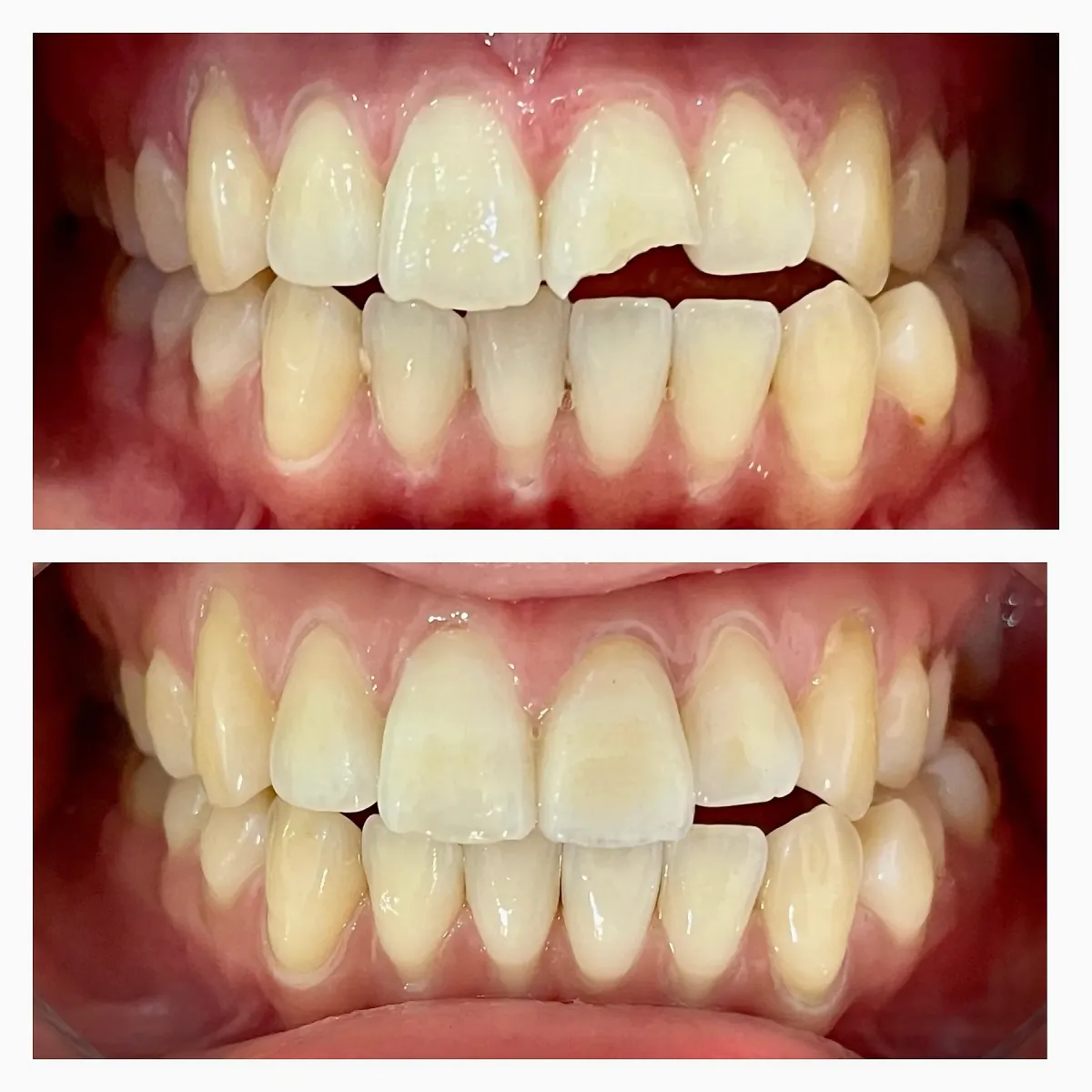
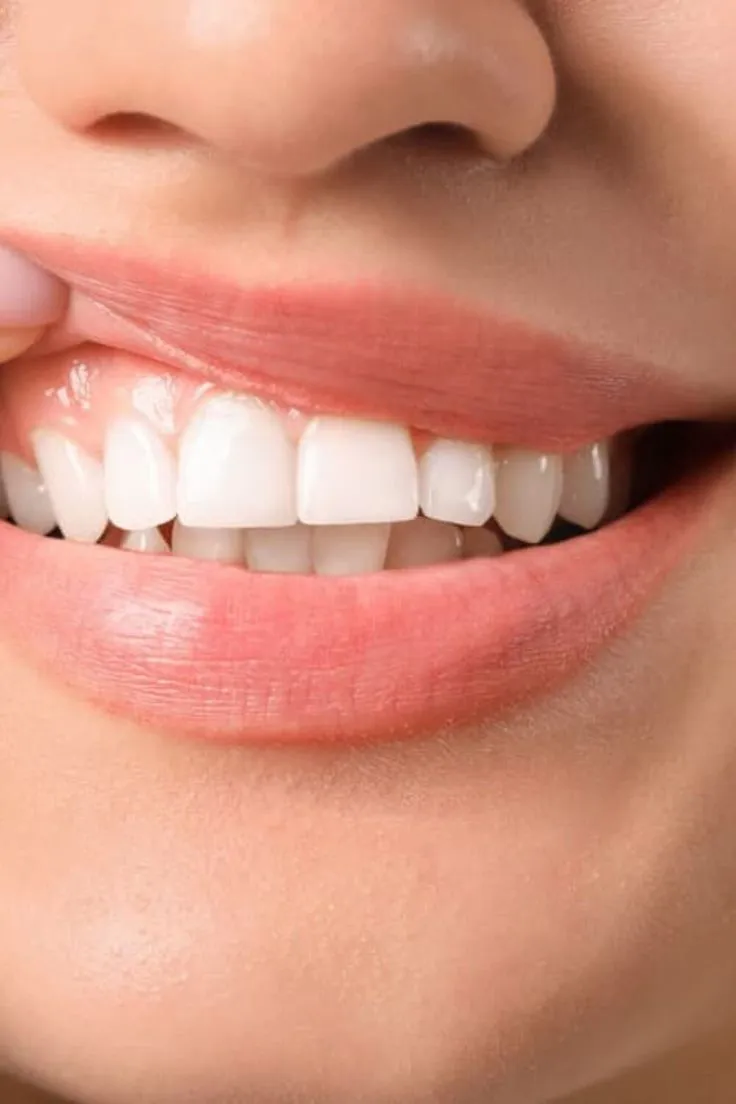

Tooth-colored fillings in Beverly Hills at ConfiDental repair cavities, chips and worn or leaking old fillings with a composite resin that is shade-matched to your tooth. Done well, the repair is hard to spot even up close. We remove only the damaged part of the tooth, bond the filling in thin layers and check your bite carefully before you leave. You see the cavity on screen and get the cost in writing, including what insurance is expected to pay, before we start.
What are tooth-colored fillings made of?
They are made of composite resin: a blend of plastic and very fine glass or ceramic particles. We place it soft, sculpt it to the shape of the tooth and harden each layer in seconds with a blue curing light.
The real advantage is that composite bonds to enamel and dentin. An old silver filling has to be held in mechanically, which means cutting undercuts into healthy tooth. A bonded filling does not, so we can usually keep more of your natural tooth. The American Dental Association notes that composite works well for small and mid-size fillings on front and back teeth, though it takes a little longer to place than amalgam and usually costs more.
As for color, we match it to your tooth, not a generic white. Sometimes we layer two shades, a slightly more translucent one at the edge and a warmer one in the body, so it reads like natural enamel.
When you might need a filling
- A cavity found at your dental exam or on X-rays
- A small chip or broken edge
- Worn notches at the gum line from hard brushing or grinding
- An old filling that is cracked, leaking or has new decay at its edge
- A gap or rough spot that keeps catching food
Once decay breaks through the enamel, the hole cannot heal on its own, as the National Institute of Dental and Craniofacial Research explains. It will keep growing, slowly at first, then faster once it reaches the softer dentin underneath. Our cavities page covers the stages of decay and what each one needs.
Composite vs. silver fillings and other options
| Tooth-colored composite | Silver (amalgam) | Glass ionomer | Porcelain inlay or onlay | |
|---|---|---|---|---|
| Looks | Matches your tooth | Silver, darkens over time | Tooth-colored but less natural | Matches your tooth |
| Best for | Small to medium cavities, front and back | Medium to large back teeth | Gum line, root decay, children | Larger cavities on back teeth |
| Metal-free | Yes | No, contains mercury | Yes | Yes |
| Tooth removed | Less, because it bonds | More, to hold it in | Less | Moderate |
| Visits | One | One | One | Usually two |
| Typical lifespan | Often 5 to 10 years or more | Often 10 to 15 years | Shorter | Often 10 to 15 years or more |
| Cost | Moderate | Lowest | Low | Higher |
Should you replace old silver fillings?
Many patients ask because silver fillings contain mercury. Here is the balanced picture.
The FDA recommends that certain higher-risk groups, including pregnant women, young children and people with kidney problems or a mercury allergy, receive non-amalgam fillings when possible and appropriate. The FDA does not recommend removing silver fillings that are in good condition, because drilling them out releases mercury vapor and removes healthy tooth.
So we replace a silver filling when it is cracked, leaking or has decay under it, or when it sits on a visible tooth and you want it gone, knowing the trade-offs. When we do remove one, we isolate the tooth with a rubber dam and use high-volume suction to limit what you breathe or swallow.
Your filling visit, step by step
- Check and plan We look at the tooth, take an X-ray if needed and show you the problem. You get the cost before we begin.
- Numbing We numb the area and confirm it is fully numb. Very shallow fillings sometimes need little or none. Our article do cavity fillings hurt? covers this in more detail.
- Removing decay Only decayed or weakened tooth comes out. Healthy structure stays.
- Bonding and layering The tooth is kept dry, a bonding agent goes on, and composite is placed in thin layers, each cured with the light.
- Shaping and bite check We sculpt the filling, check your bite with marking paper and polish it smooth.
That bite check is where we take our time. A filling that sits even slightly high is the most common reason a tooth aches after treatment. A typical filling takes 30 to 60 minutes, and several can often be done in one visit.
After your filling
- Wait for the numbness to wear off before eating, usually 2 to 3 hours.
- Mild sensitivity to cold or biting for a few days is common, especially after a deep filling.
- Brush and floss normally from the same day.
- Call us if your bite feels high, if pain is getting worse rather than better, or if the tooth starts to throb on its own.
Our guide on how long a tooth should hurt after a filling explains what is normal. Strong, lingering pain or a gum bump can mean the nerve is involved, which may point toward root canal therapy.
How long do tooth-colored fillings last?
Composite fillings often last 5 to 10 years or more. What shortens or lengthens that:
- Size and position. A small filling on a front tooth outlasts a large one on a back molar.
- Grinding. Clenching at night chips fillings. A night guard protects them.
- Diet and home care. Frequent sugar and skipped flossing let new decay start at the edges.
- Regular checkups. We check every filling at your exam and polish or repair small problems early.
Composite can pick up some staining from coffee, tea, red wine or smoking over the years, and it does not respond to bleaching. If you are planning to whiten, do it first. We then match any new fillings to your brighter shade.
When a filling is not the right choice
A filling replaces part of a tooth. It cannot hold together a tooth that is badly broken. We will suggest something stronger if:
- The cavity spans more than about half the tooth’s width
- A cusp is cracked or missing
- A large old filling has cracks running around it
- The tooth has had a root canal
In those cases, a porcelain onlay or a porcelain crown protects the tooth from splitting. For purely cosmetic changes to front teeth, such as shape or color, veneers or bonding may suit you better.
Cost of tooth-colored fillings in Beverly Hills
Cost depends mostly on how many surfaces of the tooth the filling covers. These are our typical ranges:
| Treatment | Typical cost |
|---|---|
| Small tooth-colored filling (one surface) | About $200 to $300 |
| Medium filling (two surfaces) | About $300 to $450 |
| Large filling (three or more surfaces) | About $400 to $600 |
| Replacing an old silver filling | Similar to a new filling of the same size |
| Crown | $1,200 to $2,000 |
Most dental plans cover a large share of fillings after the deductible. Some plans pay only the silver-filling rate on back teeth, called a downgrade, and you pay the difference for composite. We check this before treatment. Read more in understanding dental insurance, or see our payment options, including CareCredit.
Why patients choose ConfiDental
Dr. Liyan Massaband has more than 15 years of experience. Her approach to fillings is straightforward: keep as much natural tooth as possible, show you the problem before treating it, and adjust the bite until the filling feels like your own tooth.
We are on Brighton Way in the Golden Triangle, close for patients coming from Century City or Beverly Grove. Appointments are unhurried, with time set aside for you. Call (310) 858-9212 or schedule a filling visit online.