
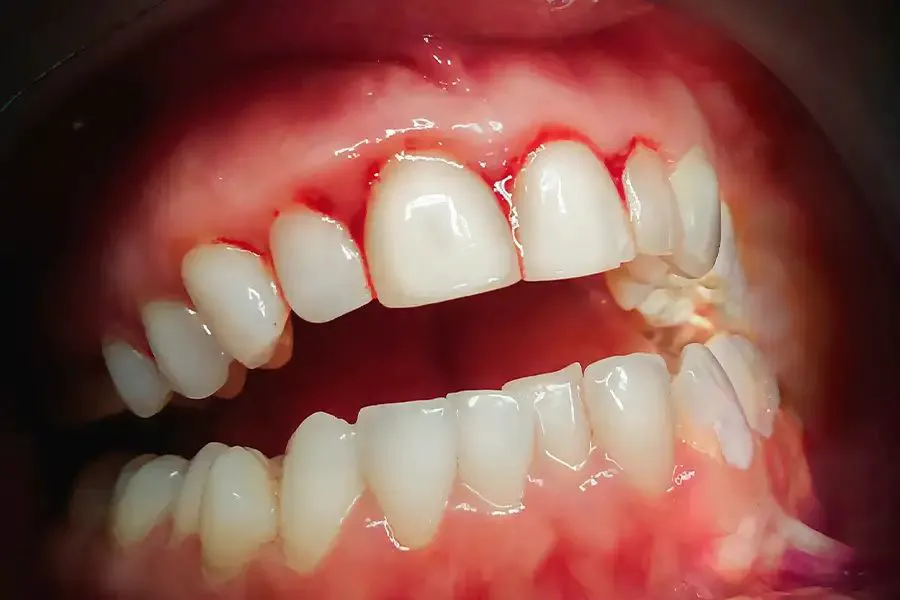

Laser gum therapy in Beverly Hills at ConfiDental pairs a thorough deep cleaning with a dental laser to remove infected tissue and bacteria from below the gum line. For many people it means less cutting and a quicker, more comfortable recovery than traditional gum surgery. Dr. Liyan Massaband measures your gums first and tells you plainly whether laser treatment, a standard deep cleaning or a periodontist is the right next step.
If your gums bleed when you brush, feel tender, or a hygienist has mentioned deep pockets, you are in large company. The CDC reports that about 4 in 10 U.S. adults aged 30 and older have some degree of periodontitis. It can be controlled, and the earlier it is treated, the simpler treatment tends to be.
What laser gum therapy does
A gum pocket is the small gap between tooth and gum. In gum disease, that gap deepens, its lining becomes inflamed, and bacteria settle in where a toothbrush cannot reach. Laser therapy adds a dental laser to the root cleaning to:
- Remove the inflamed, infected lining of the pocket
- Reduce bacteria deep in the pocket
- Seal small blood vessels, so there is less bleeding
- Leave a clean surface for the gum to heal back against the tooth
The roots are still carefully cleaned of tartar by hand and ultrasonic instruments, because no laser removes hardened deposits on its own. The two together are what make the treatment work.
Signs you may need gum treatment
Gum disease is often painless early on, so these signs are easy to dismiss:
- Gums that bleed when you brush or floss
- Red, puffy or tender gums
- Bad breath or a bad taste that keeps coming back
- Gums pulling back so teeth look longer
- Sensitivity at the gum line
- Teeth that feel loose or have started to shift
- Pus between the teeth and gums
Our page on gum disease explains the condition and its stages in more depth.
Which treatment fits your stage?
| Stage | Typical pocket depth | What is happening | Usual treatment |
|---|---|---|---|
| Healthy | 1 to 3 mm | Gums fit snugly | Regular cleanings |
| Gingivitis | Up to about 4 mm, no bone loss | Inflamed, bleeding gums | Professional cleaning and better home care, fully reversible |
| Mild to moderate periodontitis | About 4 to 6 mm | Early bone loss | Scaling and root planing, with laser where it helps |
| Advanced periodontitis | 6 mm or more | Significant bone loss, loose teeth | Laser-assisted therapy or gum surgery, sometimes with a periodontist |
| Peri-implantitis | Varies | Infection and bone loss around an implant | Cleaning and decontaminating the implant, sometimes with the laser |
Gingivitis can be reversed. Periodontitis cannot be undone, but it can be stopped and kept stable with treatment and maintenance.
Laser gum treatments we offer
Laser-assisted deep cleaning
For mild to moderate gum disease. Your teeth are cleaned below the gum line, and the laser is used inside the pockets to reduce bacteria and inflamed tissue. We usually work one quadrant or one side at a time, under local anesthetic.
Laser therapy with bone regeneration
Where gum disease has destroyed bone around a tooth, laser therapy can be combined with bone grafting material to encourage the body to rebuild support. How much bone returns varies with the shape of the defect and from person to person, and we tell you what is realistic before you start.
Peri-implantitis treatment
Implants can develop gum disease too. We clean and decontaminate the implant surface and treat the tissue around it, sometimes with the laser. The early stage, peri-implant mucositis, can often be reversed if it is caught in time. Our guide to implant failure signs describes what to watch for.
Cosmetic laser gum treatments
Not every laser treatment is about disease. Laser gum contouring evens out an uneven or gummy smile, and gum depigmentation lightens dark patches of gum. Both are often part of a smile makeover.
Laser or traditional gum surgery: an honest comparison
| Laser-assisted therapy | Traditional gum surgery | |
|---|---|---|
| Cutting of the gums | Little or none | Gum is opened and folded back |
| Stitches | Usually none | Usually needed |
| Comfort afterward | Mild soreness for a day or two | More soreness and swelling for several days |
| Back to work | Usually the next day | Often a few days |
| Long-term results | Depend on stage, home care and maintenance | Depend on stage, home care and maintenance |
Many patients find laser treatment more comfortable. The research does not show lasers produce better long-term results than conventional periodontal surgery, and the American Academy of Periodontology's 2018 best evidence review reached that conclusion. So we choose the approach that suits your gums, not the newest-sounding one, and for some advanced cases we will recommend a periodontist.
What to expect at our office
- Gum evaluation We measure pocket depth around every tooth, check for recession and looseness, and take digital X-rays to see the bone.
- Your plan Dr. Massaband explains your stage in plain language, goes through every option, including the non-laser ones, and gives you a written, itemized estimate.
- Treatment Your gums are numbed, the roots are cleaned and the laser is used in the pockets. Most patients find it easier than they expected, and there is no rush; we keep appointments unhurried.
- Follow-up We re-measure your gums at follow-up visits, often around two and eight weeks, to see how the pockets are responding.
Comfort and healing
Expect mild soreness for a day or two, usually handled with over-the-counter pain relief. Most people are back at work the next day.
- First 24 to 48 hours: mild tenderness, soft and cool foods
- First week: gums settle and bleeding reduces
- Two to four weeks: gum tissue firms up around the teeth
- Three to six months: pockets continue to tighten and any bone repair takes place
Start warm salt water rinses the day after treatment and brush gently as directed. Smoking and poorly controlled diabetes slow healing and raise the chance of the disease returning.
Risks and realistic results
Laser gum therapy is usually well tolerated, but it is still treatment of infected tissue. Expect tender gums and some sensitivity for a few days. As the gums heal and tighten, they can sit lower on the teeth, which may make some teeth look slightly longer. How much bone returns after regenerative treatment is not predictable at every site. Results vary with how advanced the disease is, smoking, diabetes and how well daily cleaning and maintenance visits are kept up, and some pockets may still need a periodontist.
Laser gum treatment cost in Beverly Hills
| Treatment | Typical cost | Insurance |
|---|---|---|
| Laser-assisted periodontal therapy | $300 to $600 per quadrant, plus $200 to $400 for the laser | Often partly covered |
| Laser-assisted bone regeneration | $1,500 to $4,000 | Often partly covered |
| Peri-implantitis treatment | $1,000 to $3,000 | Depends on plan and diagnosis |
| Laser gum contouring | $300 to $600 per arch | Usually not covered |
| Gum depigmentation | $800 to $1,500 per arch | Usually not covered |
These are typical ranges, not a quote. You receive an itemized estimate after your evaluation. We check your benefits beforehand, and our guide to understanding dental insurance explains how periodontal coverage usually works. CareCredit financing is available.
Keeping the results
Results last when the bacteria are kept in check. That means periodontal maintenance cleanings, usually every three to four months, thorough daily cleaning between the teeth, and not smoking. Skipping maintenance is the most common reason pockets deepen again.
Patients come to our Brighton Way office from Beverly Hills, Bel Air and Century City. Call (310) 858-9212 or book a gum evaluation online.