
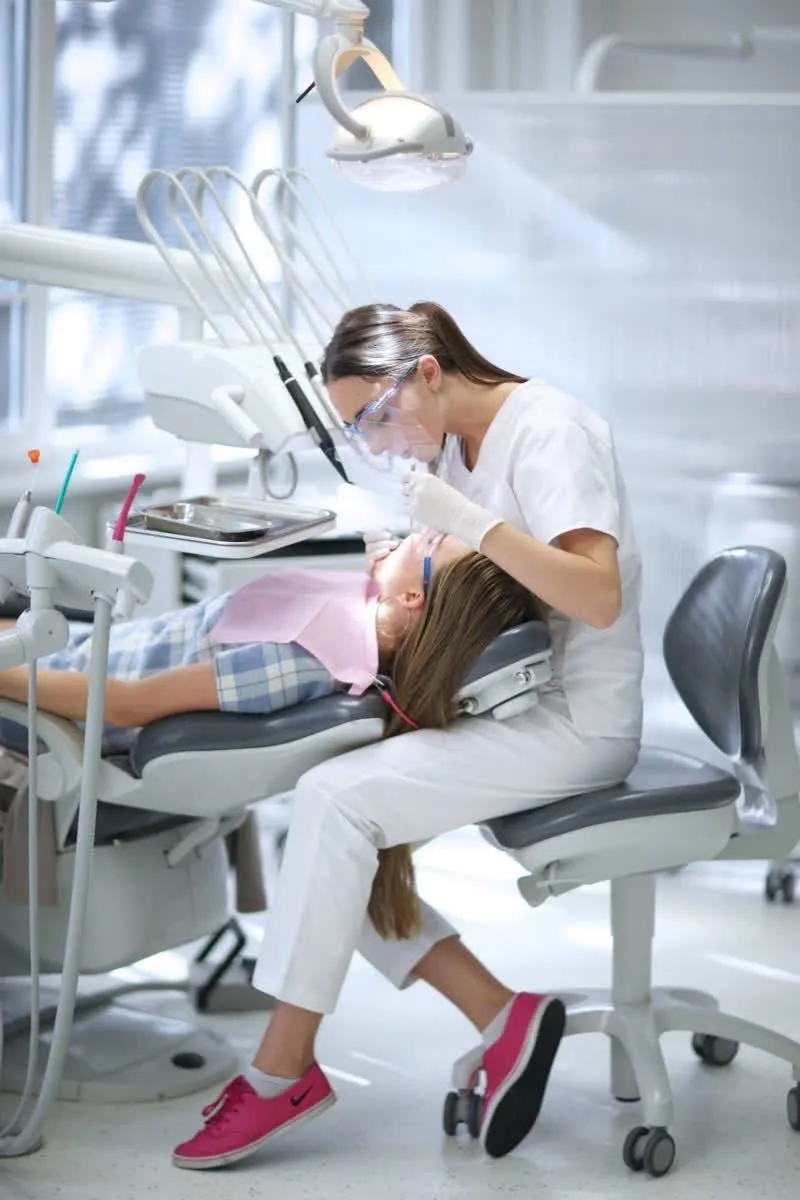

Dental implant surgery in Beverly Hills is the visit where we place a small titanium post in your jaw to stand in for a missing tooth root. At ConfiDental it usually takes 30 to 60 minutes for one implant, you are numb throughout, and most people are back at a desk the next day. Dr. Liyan Massaband plans every implant on a 3D scan first, so by the time you sit down for surgery the position, angle and size are already decided.
This page covers the surgical step itself. If you are still deciding whether an implant is right for you, our dental implants overview is the better place to start.
What happens during implant placement
An implant has three parts: the post in the bone, an abutment that connects to it, and the crown you see. Surgery places only the post. Over the following months, bone grows tightly against the implant surface, a process called osseointegration. That bond is what lets an implant take full chewing force without a hint of movement.
Nearly every implant placed today is an endosteal implant, meaning it sits inside the jawbone rather than on top of it.
Who is a good candidate for implant surgery?
Most healthy adults who have lost a tooth, or have one that cannot be saved, can have an implant. The things we look for:
- Enough jawbone to hold the post, or willingness to have a bone graft first
- Healthy gums, with any gum disease treated before surgery
- Finished jaw growth, usually by the late teens or early twenties
- A commitment to cleaning around the implant and coming in for checkups
Some situations mean we wait or plan extra steps. Smoking and vaping slow healing and raise the chance an implant fails to bond. Diabetes that is not well controlled, bone medicines such as bisphosphonates, past radiation to the jaw, pregnancy and active infection all change the timing. Please tell us about every medicine you take, including blood thinners, so we can coordinate with your physician when needed.
Being told you have "too little bone" rarely ends the conversation. Grafting, angled implants with All-on-4, or a referral to an oral surgeon for more advanced techniques are all options.
Planning with a 3D scan and surgical guide
Before surgery day you have a dental exam and a 3D CBCT scan. The scan shows the height and width of your bone and exactly where the nerve, sinus and neighboring roots sit. We then plan the implant on screen around the crown it will eventually hold, working backward from the tooth rather than forward from the bone.
For many cases we turn that plan into a 3D-printed surgical guide. It fits over your teeth or gums and steers the drill to the planned position and depth.
| Guided placement | Freehand placement | |
|---|---|---|
| Planning | Digital plan made into a physical guide | Digital plan used as a reference |
| Best for | Front teeth, several implants, narrow bone | Simple sites with plenty of bone |
| Gum opening | Often smaller, sometimes flapless | Usually a small flap |
| Extra cost | Guide fee | None |
A guide improves accuracy, but it does not replace judgment in the chair, and not every case needs one. We will tell you which approach your case calls for and why.
Your surgery day, step by step
- Final check We review your health history and medicines and recheck the plan. If you chose sedation, it starts now.
- Numbing A topical gel goes on first, then local anesthesia. You will feel pressure and vibration, not pain. If anything feels sharp, tell us and we add more.
- Preparing the site We make a small opening in the gum, or in some guided cases remove only a tiny circle of tissue. The bone is shaped with a sequence of drills, cooled with water the whole time.
- Placing the implant The post is threaded gently into the bone and its stability is measured. If a tooth is being removed the same day, the implant can sometimes go in immediately; our surgical extractions page explains that step.
- Closing Either a healing cap sits just through the gum, or the gum is closed over the implant to be uncovered later. A few small stitches finish the visit.
- Temporary tooth For front teeth and full-arch cases, we can often fit a temporary the same day when the implant is stable enough.
One implant takes about 30 to 60 minutes. Several implants in one visit take roughly 1.5 to 2.5 hours.
Is implant surgery painful?
During the procedure, no. Local anesthesia handles the surgery itself, and many people are surprised by how quiet the visit feels. For nervous patients we offer sedation, and we never rush the numbing.
Afterward, expect soreness and some swelling for a few days. Many people manage with over-the-counter pain relievers. Swelling usually peaks on day two or three and then fades.
Recovery after dental implant surgery
| Time after surgery | What to expect |
|---|---|
| Day 1 | Numbness wears off, mild oozing, rest and cold packs |
| Days 2 to 3 | Swelling and soreness peak, then start to ease |
| Days 4 to 7 | Most people feel close to normal, soft foods continue |
| Weeks 1 to 2 | Stitches dissolve or come out, gum heals over the site |
| Months 3 to 6 | Bone bonds to the implant, then the final crown is made |
Our article on how long dental implants take to heal goes through each stage in more detail.
Aftercare and what to eat
- Cold packs on the cheek for the first 24 to 48 hours
- Pain relievers as directed
- Soft, cool foods at first: yogurt, eggs, smoothies without a straw, lukewarm soup, pasta, fish
- Chew on the other side until we clear the implant for biting
- Gentle salt water rinses from the next day, and normal brushing of your other teeth
- No smoking or vaping while you heal
Call us if you notice
- Bleeding that does not slow after 30 minutes of firm pressure
- Swelling that gets worse after day three, fever or pus
- The gum opening over the implant, or a loose healing cap
- Numbness of the lip or chin that lasts after the anesthetic should have worn off
These are uncommon and usually simple to manage when caught early. Our page on dental implant complications explains what we look for.
Risks of implant surgery
Implants have a high success rate, but every surgery carries some risk: infection at the site, temporary tingling from nerve irritation, sinus problems with upper back implants, or an implant that does not bond and needs replacing after healing. Damage to neighboring roots is rare with 3D planning. Treating gum disease first, not smoking and keeping up cleanings all lower these risks.
What affects the cost of implant surgery in Beverly Hills
| Part of treatment | Typical cost |
|---|---|
| Consultation and 3D CBCT scan | $150 to $350 |
| Implant post placement (surgery) | $1,500 to $3,000 |
| Surgical guide, if used | $300 to $500 |
| Abutment | $500 to $1,000 |
| Implant crown | $1,200 to $2,500 |
| Complete single tooth implant | $4,500 to $7,500 |
| Bone graft, if needed | $500 to $3,000 |
| All-on-4, per arch | $20,000 to $35,000 |
| Sedation | Depends on type and length |
Your number depends on how many implants you need, whether grafting is required, the type of crown and whether sedation is used. When you compare quotes, ask whether the price includes the post, abutment and crown; some advertised figures cover the post alone. You get a written, itemized plan from us before anything starts.
Many dental plans cover part of the crown and sometimes the implant, up to your yearly maximum, and HSA or FSA funds can usually be used. Our payment options page explains CareCredit financing, and the dental implant cost guide breaks down each part.
After the implant bonds
Once X-rays and a stability check confirm the bond, we attach the abutment and make your crown. That stage is covered on our implant restoration page. Replacing several teeth or a whole arch is a different plan; see implant overdentures and full mouth restoration.
Who places your implant
She has more than 15 years in practice and over 1,500 implant procedures, and she plans both the implant position and the crown that will sit on it. For complex bone loss or medical situations, she works with oral surgeons and periodontists and will tell you plainly when a referral is the better choice. You can read more on Dr. Massaband's profile.
Patients come to our Brighton Way office from across the Westside, including Century City and Brentwood. Appointments are unhurried, so your surgery has the room's full attention. Call (310) 858-9212 or book an implant consultation online.