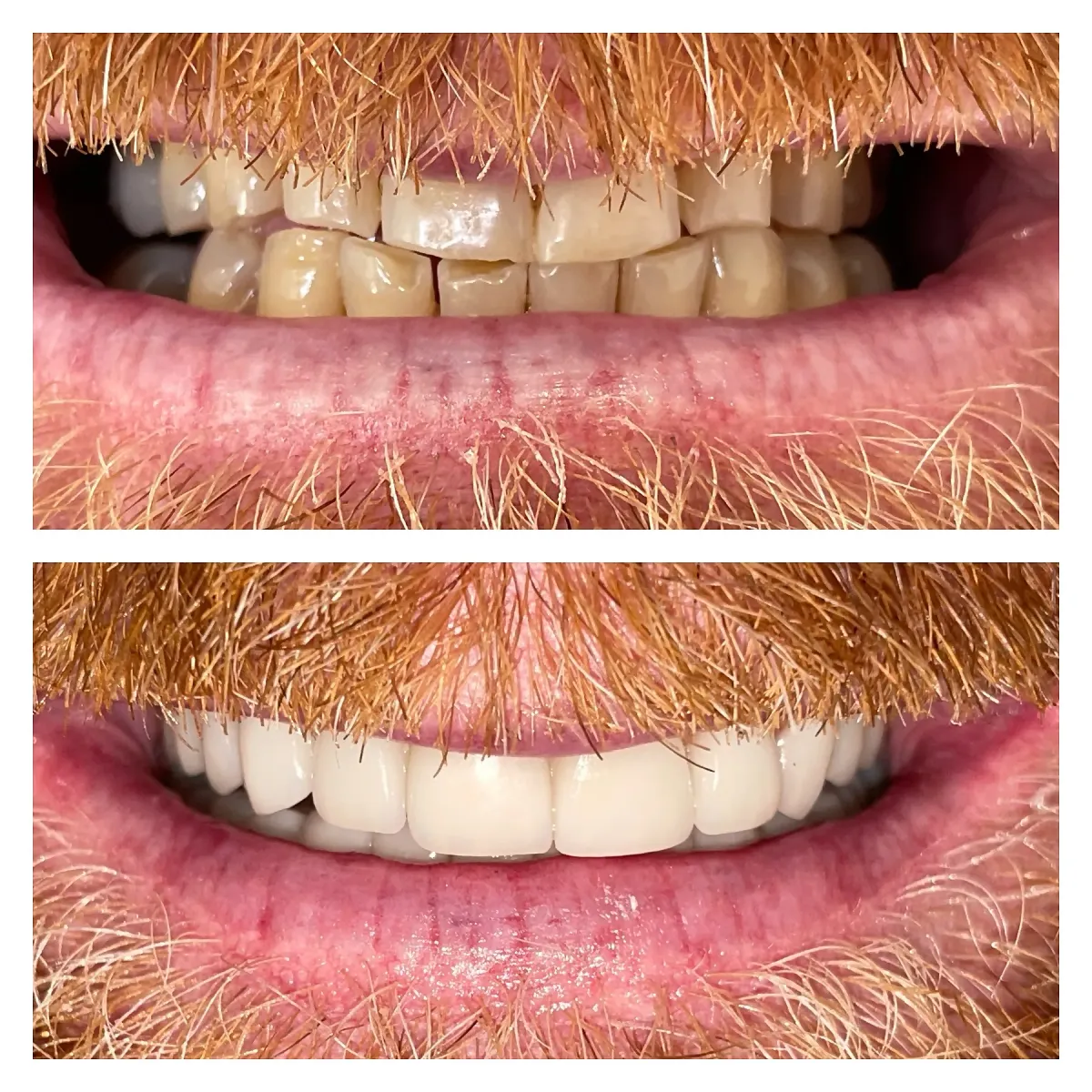


Full mouth restoration in Beverly Hills rebuilds the health, function and appearance of most or all of your teeth under one coordinated plan, instead of repairing one problem tooth at a time. At ConfiDental, Dr. Liyan Massaband looks at your teeth, gums, bite and jaw together, then sets out the treatments in phases so you know the order, the timeline and the cost before anything begins.
You may also hear it called full mouth reconstruction or rehabilitation. They mean the same thing.
What full mouth restoration involves
The treatments themselves are familiar: crowns, onlays, veneers, bridges, dental implants, dentures, gum care, sometimes Invisalign. What makes it a full mouth restoration is the planning. Every tooth affects how the others meet, so we design the whole mouth as one system: how high the bite sits, how the jaws close, the shape of the smile, and the health of the gums and bone that hold it all up.
Done piecemeal, a new crown can be built to fit a bite that is already collapsing. Done as a plan, each tooth is shaped to the bite you should have.
Do you need a full mouth restoration?
It may be the right approach if several of these sound familiar:
- Teeth worn short, flat or chipped from grinding or acid erosion
- Many old fillings or crowns that are cracking, leaking or failing
- Several missing teeth, or teeth that are loose or cannot be saved
- A bite that has collapsed, so your lower face looks shorter or your lips look thinner
- Jaw pain, headaches or trouble chewing tied to how your teeth meet
- Gum disease that has caused recession or bone loss
- A denture that is loose or uncomfortable
- Damage from an accident, reflux, an eating disorder or medical treatment
If only your front teeth bother you and the rest of your mouth is healthy, a smile makeover is usually the better fit.
| Full mouth restoration | Smile makeover | |
|---|---|---|
| Main goal | Health, function and bite, plus appearance | Appearance of the smile |
| Teeth involved | Most or all teeth in both jaws | Mainly the teeth that show |
| Typical treatments | Gum care, crowns, implants, bridges, dentures, bite protection | Whitening, veneers, bonding, Invisalign |
| Bite | Often rebuilt or raised | Usually kept the same |
| Typical time | 3 to 12 months or longer | A few weeks to a few months |
Treatments that may be part of your plan
A healthy foundation first
New crowns and implants do not last on unhealthy gums. So the first phase usually covers gum disease treatment or a deep cleaning, fillings and root canal treatment for teeth worth saving, and bone grafting where implants will need more support.
Rebuilding damaged teeth
- Porcelain crowns and onlays for worn, cracked or heavily filled teeth
- Veneers for front teeth that need a change in shape or color
- Bridges to fill a gap using the teeth on either side
- Provisional restorations, temporary teeth that let you test the new bite and look before the final work is made
Replacing missing teeth
- Individual implants for one or several missing teeth
- All-on-4 implants, a fixed full arch on four implants per jaw
- Implant overdentures, a removable denture that snaps onto implants
- Dentures when implants are not the right choice
Straightening and protecting
Invisalign can move teeth into a better position before crowns or veneers, so less tooth structure has to be removed. A night guard protects the finished work if you clench or grind. We also restore implants placed elsewhere, including crowns that have come loose or broken.
Which approach fits your situation?
| Your situation | Often recommended |
|---|---|
| Worn or broken teeth, few missing | Crowns, onlays and veneers, plus a night guard |
| A few missing teeth in different areas | Individual implants or bridges with crowns |
| Most teeth failing in one jaw | All-on-4 or an implant overdenture for that jaw |
| All teeth failing in both jaws | Full mouth implants or overdentures |
| Loose denture | Implant overdenture |
| Bone loss from gum disease | Gum treatment and grafting before implants |
This is a starting point, not a prescription. Two people with similar X-rays can need different plans because of their bite, their habits and what they want.
The process at our Beverly Hills office
1. Full mouth evaluation
We take X-rays, digital scans and photos, add a 3D CBCT scan when implants are on the table, and check your bite and jaw joints. We also ask about grinding, reflux, sleep and medical history. These usually explain why the damage happened, and a plan that ignores the cause tends to fail the same way.
2. Your written plan
You see your options side by side: what each one involves, the order of treatment, how long each phase takes and a written, itemized cost estimate. Nothing begins until you are comfortable with it.
3. Phase one, health
Gum disease, decay and infection are treated first. Teeth that cannot be saved are removed, and implants are placed when they are part of the plan.
4. Phase two, the test drive
Temporary teeth let you live with the new bite height, tooth shape and look for a few weeks. We adjust them until speech, chewing and appearance all feel right. This step is where most of the fine-tuning happens, and it is much easier to change a temporary than a finished porcelain crown.
5. Phase three, final restorations
Your final crowns, veneers, bridges or implant teeth are made by a dental lab and fitted, often in stages so no single visit runs too long.
6. Protection and maintenance
You leave with a home care routine, a cleaning schedule and a night guard if you grind. Most problems after a full mouth restoration come from grinding and gum disease, so this step matters as much as the others.
Comfort during treatment
Work is done under local anesthesia, and sedation is available for longer visits or anxious patients. Because our schedule is unhurried, long appointments are planned with breaks and without a rush. Expect some sensitivity after crowns, a short adjustment period for speech with new teeth, and soreness for a few days after any implant surgery. You are never left without teeth while you wait for final work.
How long does full mouth restoration take?
| Type of plan | Typical timeline |
|---|---|
| Crowns and veneers, no implants | About 1 to 3 months |
| Including a few implants | About 4 to 9 months, to allow healing |
| All-on-4 or full mouth implants | Temporary teeth often the day of surgery, final teeth after about 3 to 6 months |
| With Invisalign first | Add several months |
| With gum treatment or bone grafting | Add a few weeks to several months |
Full mouth restoration cost in Beverly Hills
The total depends on how many teeth need work and which treatments you choose. Most patients see more than one option, from a phased plan to a complete one.
| Treatment | Typical cost |
|---|---|
| Full mouth evaluation with 3D scan | $150 to $350 |
| Porcelain crown | $1,200 to $2,000 per tooth |
| Porcelain veneer | $1,500 to $2,500 per tooth |
| Single tooth implant with abutment and crown | $4,500 to $7,500 |
| Implant overdenture | $6,000 to $15,000 per arch |
| All-on-4 fixed full arch | $20,000 to $35,000 per arch |
| Full mouth implants, both jaws | $40,000 to $80,000 or more |
| Full mouth restoration with crowns and veneers | Often $30,000 to $80,000, depending on the number of teeth |
Insurance often helps with exams, gum treatment, fillings, crowns and sometimes implants, up to your yearly maximum. Treatment can be phased across benefit years to make better use of that coverage. Our guide to dental insurance explains how yearly maximums work, and our payment options page explains CareCredit financing.
Results, risks and how long the work lasts
With good care, crowns and veneers often last 10 to 15 years or more, and implants can last for decades. The things that shorten their life are predictable: grinding without a guard, gum disease that returns, and skipped cleanings.
What is normal along the way: some sensitivity after crowns, a few weeks of getting used to a new bite, and occasionally a crowned tooth that later needs a root canal. Implant risks such as infection or slow healing are higher in smokers and people with uncontrolled diabetes. Porcelain can chip under heavy grinding.
Aftercare
- Brush twice a day and clean between teeth and under bridges daily
- Wear your night guard every night if one was made for you
- Keep cleanings every three to six months, as we recommend for your case
- Call us early about anything that feels high, loose or sharp
Many full mouth patients come from Westwood, Brentwood and across the Westside, and some from out of town; our page for traveling patients explains how we group visits to cut down on trips. Dr. Massaband has more than 15 years of restorative experience and over 1,500 implant procedures, and she will tell you plainly when a periodontist, oral surgeon or prosthodontist should join your care. Call (310) 858-9212 or book a full mouth evaluation online.