
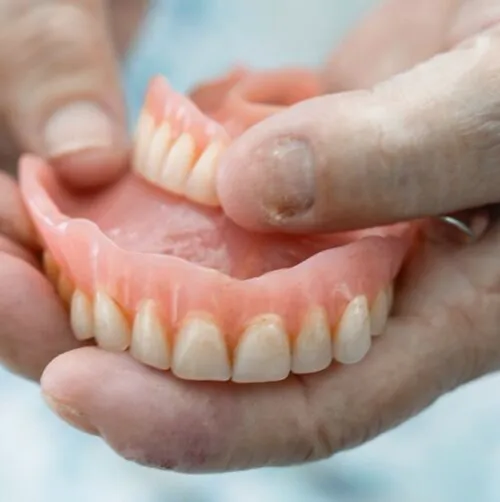

An implant overdenture is a denture that snaps onto two to four dental implants, so it stays put when you eat, talk and laugh, yet still comes out each night for cleaning. For many people with a loose lower denture, it is the single biggest improvement available short of fixed teeth. At our Beverly Hills office, Dr. Liyan Massaband plans the implants and the denture together, so the attachments sit exactly where the teeth need support.
If you are missing all your teeth in one jaw, or soon will be, and a conventional denture has never felt secure, this page explains what an overdenture is, who it suits, how treatment works at ConfiDental and what affects the cost.
Why a regular denture slips
A full denture stays in by suction and the shape of your gums. That works reasonably well for an upper denture, which covers the palate. A lower denture has a narrow horseshoe shape, very little surface to grip and a tongue pushing against it all day.
There is a second, slower problem. Once teeth are gone, the jawbone that held them starts to shrink, because nothing is stimulating it. Each year the ridge under the denture gets a little lower and narrower, the fit loosens, and adhesive does more of the work. Many people notice their face looking shorter or their lips thinner over time.
Missing teeth also affect more than appearance. People avoid foods they enjoy, change how they speak, or stop smiling fully in photos. Where some natural teeth remain, the neighbors drift into gaps, which can strain the bite and the jaw muscles.
What an implant overdenture is
Dental implants are small titanium posts placed in the jawbone. After they bond to the bone, each one gets an attachment, usually a ball, a locator-style cap or a short bar joining the implants. Matching clips inside the denture click onto those attachments.
The result:
- The denture no longer floats; it locks into place
- Chewing force goes partly into the implants instead of only onto the gums
- An upper overdenture can often be made with less palate coverage, which helps taste and comfort
- The bone around each implant is stimulated by chewing, which slows shrinkage in those areas
- Adhesive is usually no longer needed
You still take it out to clean it and to rest your gums overnight. That is the main difference from a fixed bridge such as All-on-4, which stays in permanently.
Who is a good candidate for an overdenture?
Overdentures suit people who:
- Have lost all their teeth in the upper or lower jaw, or have teeth that cannot be saved
- Wear a conventional denture that slips, rubs or needs more and more adhesive
- Want much better stability without the cost or surgery of a fully fixed arch
- Prefer something they can remove and clean easily, or have limited hand dexterity for cleaning under a fixed bridge
- Are healthy enough for minor implant surgery
Timing matters. The sooner implants are placed after teeth are lost, the more bone there usually is to hold them. If you have worn a denture for many years, the bone may have thinned, and bone grafting can rebuild enough to support implants. A 3D scan answers that question before you commit to anything.
Smoking, uncontrolled diabetes, bone medicines such as bisphosphonates and past radiation to the jaw all need a careful look, and we review your health history with that in mind.
Two implants or four?
For the lower jaw, two implants near the front are a well-established starting point and make a large difference for most people. Four implants spread the load further and give a firmer, more stable feel.
For the upper jaw, we usually plan four. Upper bone is softer, and more implants are needed if you want the denture to cover less of the palate.
| 2-implant overdenture | 4-implant overdenture | Fixed full arch | |
|---|---|---|---|
| Typical use | Lower jaw | Upper or lower | Upper or lower |
| Stability | Much better than a denture, some movement | Very stable | Does not move |
| Removed daily | Yes | Yes | No |
| Palate coverage, upper | Usually full | Often reduced | None |
| Relative cost | Lowest implant option | Middle | Highest |
Treatment at ConfiDental, step by step
1. Consultation and 3D scan
We start with how your current denture behaves and what you want to change. An exam, X-rays and a 3D CBCT scan show how much bone you have and where the nerves and sinuses sit. If your current denture fits well, we look at whether it can be adapted or whether a new one will serve you better.
2. Planning the denture first
The tooth position, bite height and lip support are planned before the implants, then implants are placed to support that design. You receive a written, itemized plan.
3. Implant placement
The implants are placed under local anesthesia, with sedation available. For two implants the visit is usually short. Our page on implant surgery explains the step in detail. Most people go back to desk work the next day.
4. Healing
The implants bond to the bone over roughly three to six months. During that time you wear your existing or temporary denture, softened on the inside so it does not press on the implants.
5. Attachments and your overdenture
Once the implants are stable, we connect the attachments and fit the clips into a new or adapted denture. You practice putting it in and taking it out before you leave. A few short follow-up visits fine-tune the fit and the grip.
Comfort and daily life
Implant surgery for an overdenture is usually less involved than people expect. Soreness and swelling for a few days are common, and over-the-counter pain relievers are often enough. Once the overdenture is fitted, most people notice the difference at the first meal: biting into an apple or a sandwich without the denture lifting.
Speech is often clearer too, because you are no longer holding the denture in place with your tongue and cheeks.
How long does an implant overdenture last?
Well-maintained implants can last for decades. The denture and its clips wear like any working part. The clips loosen gradually and are replaced in a quick visit, often every year or two depending on use. The denture itself may need a reline or eventual replacement as the gums change, though implants slow that change. Our article on how long denture implants last covers this in more depth.
Risks and limits
An overdenture needs implant surgery, so it carries the usual implant risks: infection, an implant that does not fuse with the bone, and inflammation of the gum around the posts if cleaning slips. The clips wear with daily use and need replacing, and the denture itself still needs relines over the years. It is also still removable, and a little movement under heavy chewing is normal, especially with two implants. Results vary. If you want teeth that never come out, compare it with a fixed All-on-4 bridge.
What affects the cost of overdentures in Beverly Hills
At our office, a two-implant overdenture for one arch starts from about $6,000, and a four-implant overdenture from about $10,000. Your figure depends on:
- Two implants or four, and one arch or both
- Whether grafting is needed first
- A new denture or adaptation of your current one
- The attachment type, such as individual locators or a bar
- Extractions and sedation
Our dental implant cost guide compares overdenture prices with fixed full-arch options.
Insurance sometimes contributes toward the denture and occasionally the implants, up to your yearly maximum. Our payment options page explains CareCredit financing.
Caring for your overdenture
- Take it out every night, brush it with a soft brush and denture cleanser, and keep it in water
- Brush the implant attachments and your gums gently twice a day with a soft brush
- Use small interdental brushes or a water flosser around each implant
- Come in for cleanings and checks every six months, or as we recommend
- Tell us when the grip starts to feel weaker; that usually means the clips are due for a change
Patients from West Hollywood, Beverly Grove and across the Westside come to us for overdentures, and weekend virtual consultations can be arranged on request. Call (310) 858-9212 or book an overdenture consultation online to talk through your options.