
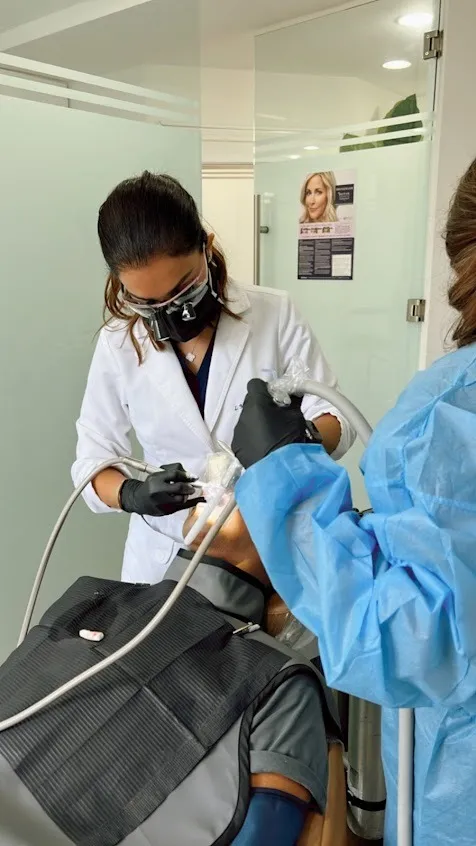

A tooth infection will not clear up on its own, and antibiotics alone will not cure it. Tooth infection treatment in Beverly Hills at ConfiDental does two things, usually starting the day you call: we relieve the pressure that causes most of the pain, then remove the infection at its source with a root canal or, if the tooth cannot be saved, an extraction. Dr. Liyan Massaband finds the infected tooth with an exam and X-rays and explains the cost of each option before anything begins.
Call 911 or go to the emergency room if you have trouble breathing or swallowing, swelling spreading to your eye or down your neck, swelling under your tongue, or a high fever and feel very unwell. If your face is swollen, our page on facial swelling explains what it means and how urgent it is.
Signs you may have a tooth infection
- A throbbing toothache that may spread to your ear, jaw or neck
- Pain when you bite or tap on the tooth
- Sensitivity to hot or cold that lingers
- A swollen gum or a pimple-like bump on the gum
- A bad taste or bad breath from one area
- Swelling of the cheek or jaw
- Fever or swollen glands under the jaw
Sometimes an infected tooth goes quiet after weeks of pain. That usually means the nerve has died, not that the infection is gone. Our guide to tooth abscess symptoms and treatment explains the types and stages in more depth.
What causes a tooth infection?
Bacteria reach the inside of the tooth, or the gum pocket beside it, and multiply where your immune system cannot easily reach. The usual routes are a deep cavity, a crack or break, an old filling that has leaked, or gum disease that has created a deep pocket. Knowing which one applies matters, because it decides how we treat it.
How we treat a tooth infection
1. Find the source
A focused exam and digital X-rays show which tooth is infected and how far it has spread. Pain from an upper back tooth can feel like it is coming from the lower jaw or the ear, so we test before we treat.
2. Relieve the pressure
Most of the pain comes from pus trapped under pressure. We release it by opening the tooth or draining the abscess, often at a same-day emergency dental visit, and many patients feel noticeably better soon after.
3. Remove the infection
- Root canal therapy cleans the infection out of the inside of the tooth and seals it, so you keep your natural tooth.
- Extraction clears the infection when the tooth is too damaged or cracked to save. We then talk through replacement options.
- Gum infection: a periodontal abscess is drained and the pocket cleaned with a deep cleaning.
Our article on root canal vs tooth extraction walks through how to choose between the two.
4. Antibiotics, only when needed
Antibiotics cannot reach the source of the infection inside the tooth, so on their own they only delay the problem. The American Dental Association's guideline on antibiotics for dental pain and swelling recommends dental treatment first, and antibiotics when the infection is spreading or you are unwell, such as with fever or facial swelling. If we prescribe them, take the full course and still complete the dental treatment.
5. Protect and follow up
Most back teeth need a crown after a root canal to keep them from cracking. We check that the infection has settled at a follow-up visit.
Is treatment painful?
The treatment itself should not hurt. Infected teeth can be harder to numb, so we test carefully and add anesthetic until the tooth is fully comfortable before we begin. Releasing the pressure usually brings real relief within a day or two. After a root canal, mild soreness for a few days is normal and usually managed with over-the-counter pain relief.
How long does treatment take?
| Step | Time in the chair | Recovery |
|---|---|---|
| Exam and drainage | One short visit | Pressure eases within a day or two |
| Root canal | One or two visits, about 60 to 90 minutes each | Mild soreness for a few days |
| Crown | One or two visits | Little or no downtime |
| Simple extraction | One visit | Socket heals over one to two weeks |
| Surgical extraction | One visit | Up to a few weeks for full healing |
What tooth infection treatment costs in Beverly Hills
| Treatment | Typical cost | When it is used |
|---|---|---|
| Urgent exam and X-rays | $100 to $250 | Every visit, to find the infected tooth |
| Draining an abscess | $200 to $500 | To release pus and pressure quickly |
| Root canal, front tooth to molar | $700 to $1,500 | To save the tooth |
| Crown after a root canal | $1,200 to $2,000 | Most back teeth |
| Extraction | $200 to $600, more for surgical removal | When the tooth cannot be saved |
These are typical ranges, not a quote; you receive a written estimate after the exam. Most dental plans cover part of exams, root canals and extractions, and we check your benefits before treatment. Our guide to understanding dental insurance explains how this usually works, and CareCredit financing is available.
Waiting usually costs more. An infection caught early can often be fixed with a root canal. Left longer, it can destroy the bone around the tooth, so the tooth may need to come out and be replaced with a bridge or implant.
What to do until your appointment
Do:
- Take an over-the-counter pain reliever as directed on the label, if it is safe for you
- Rinse gently with warm salt water
- Hold a cold pack on the outside of your cheek
- Sleep with your head raised
- Chew on the other side
Do not:
- Rely on painkillers and wait it out
- Put heat on your face
- Squeeze a swelling or gum bump
- Put aspirin directly on the gum
- Take leftover antibiotics from an old prescription
Why waiting is risky
An untreated infection can damage the bone around the tooth, spread toward neighboring teeth and, rarely, spread into the face, neck or bloodstream. The CDC lists confusion, shortness of breath, a fast heart rate, fever or shivering, extreme pain and clammy skin as possible signs of sepsis, which needs emergency care. Treated promptly, most tooth infections clear completely, and the tooth can often be saved.
Aftercare
After a root canal, avoid chewing hard food on the tooth until the permanent crown is in place. After an extraction, follow the socket care instructions we give you and avoid straws and smoking for the first few days. Call us if pain gets worse after the third day, swelling returns, or you develop a fever.
Same-day care at our Brighton Way office
We fit infection and pain cases in the same day whenever possible, Monday to Thursday 9 to 5 and Friday 9 to 4. After hours, call (818) 875-5417. Dr. Massaband has more than 15 years in practice, treats dental infections often, and refers to an endodontist, oral surgeon or hospital the same day when that is the safer path. Patients come to us from Beverly Hills, West Hollywood and Century City. Call (310) 858-9212 as early in the day as you can, or request a same-day appointment online.