
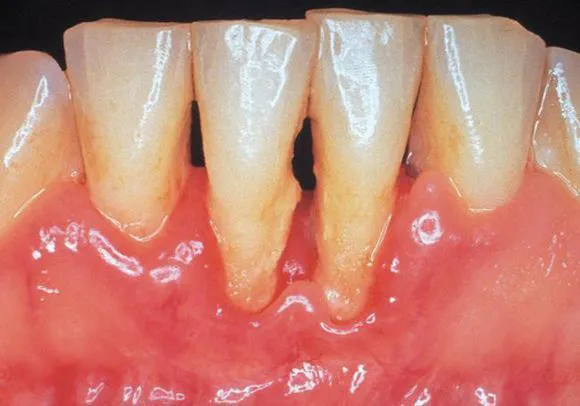

Gum grafting in Beverly Hills covers tooth roots that receding gums have left exposed, so the teeth are less sensitive, better protected from root decay and look the right length again. At ConfiDental, Dr. Liyan Massaband first works out why your gums receded, then recommends the graft that suits your teeth, using your own tissue or donor tissue, with a clear cost per tooth before treatment.
If a tooth has started to look longer, or the gum line stings when you drink something cold, this page explains what can be done.
What a gum graft is
A gum graft, also called a gingival or soft tissue graft, is a small surgery that places new tissue over an area of recession. The tissue usually comes from the roof of your mouth or from a screened donor tissue bank. Once it heals, it covers and protects the root and thickens the gum so it is less likely to keep pulling back.
Recession is common and usually slow. The National Institute of Dental and Craniofacial Research notes that gums affected by gum disease can pull away from the teeth. Many people only notice when a tooth becomes sensitive or suddenly looks too long in a photo.
Why do gums recede?
We look for the cause first, because a graft lasts best when the reason for recession is under control.
- Brushing too hard, or with a hard-bristled brush
- Gum disease that has damaged the gum and bone attachment
- Naturally thin gum tissue
- Teeth that sit toward the outside of the bone, naturally or after orthodontics
- Clenching and grinding
- Lip or tongue piercings rubbing the gum
- Smoking or chewing tobacco
Our article on receding gums and their causes explains each of these in more detail.
Signs you may need a gum graft
- Teeth that look longer than they used to
- Sharp sensitivity to cold right at the gum line
- A visible yellow root surface or a notch near the gum
- Gums that look thin, almost see-through, or keep receding
- A dark edge showing at the gum line of a crown or implant
- Very thin gums before planned braces or Invisalign
Not every case needs surgery. Small, stable recession without sensitivity can often be monitored, with gentler brushing and a night guard if you grind.
Types of gum grafts
| Graft type | Tissue source | Best for | Comfort |
|---|---|---|---|
| Connective tissue graft | Beneath the surface of your palate | Covering exposed roots, the most common choice | Palate sore for a few days |
| Free gingival graft | Surface of your palate | Thickening very thin gum around teeth or implants | Palate soreness more noticeable |
| Pedicle graft | Gum right beside the tooth, rotated over | Plenty of healthy gum next door | No palate wound |
| Donor tissue | Processed, screened donor tissue | Several teeth, or avoiding a palate wound | Usually less discomfort |
How much of a root can be covered depends largely on how much gum and bone remain between the teeth. Severe recession with lost tissue between teeth is harder to correct, and we refer complex cases to a periodontist when that gives you a better chance. The American Academy of Periodontology describes gum grafting among its surgical treatments if you would like more background.
Your gum graft at our office
1. Evaluation
We measure recession and gum thickness at each tooth, check for gum disease and take photos so you can see what we see. Any active gum disease is treated first, with a deep cleaning or laser gum therapy.
2. Plan and cost
We explain which graft fits, how much root coverage is realistic and the full cost, including what insurance is likely to pay. You get it in writing.
3. The procedure
The area, and the palate if tissue is taken from there, is numbed with local anesthesia. The graft is positioned over the exposed root and held with fine stitches, which often dissolve on their own. One tooth usually takes 45 to 60 minutes; several teeth take longer. A protective dressing may be placed, and you go home with written instructions.
Comfort and recovery
The procedure itself should not hurt. Afterward, most soreness is at the palate when tissue comes from there, and choosing donor tissue avoids that second site. Cold packs, soft foods and over-the-counter or prescribed pain relief cover most people comfortably.
| Time after surgery | What to expect |
|---|---|
| Days 1 to 3 | Soreness and some swelling, mostly at the palate |
| Days 4 to 7 | Discomfort eases, most people are back to normal routines |
| Weeks 1 to 2 | Stitches dissolve or come out, surface healing mostly done |
| Weeks 4 to 6 | Graft firmly attached, normal brushing at the site resumes |
| Around 3 months | Tissue matured, final result can be judged |
Aftercare
- Day one: soft, cool foods such as yogurt, smoothies without a straw and pudding
- First week: eggs, pasta, fish, mashed potatoes and cooked vegetables
- Avoid hard, crunchy, spicy or very hot food, and chewing near the graft
- Do not brush or floss the graft until we say so; use the rinse we give you
- No smoking or vaping, which can cause the graft to fail
- Resist pulling your lip out to look at the site
Call us if bleeding will not stop with pressure, if you develop a fever or pus, or if part of the graft comes loose.
Results: does a gum graft look natural?
In most cases, yes. Once healed, the graft blends with the nearby gum in color and texture, and your own tissue often gives the closest match. Some areas look slightly thick at first and settle over a few months. We talk about a realistic amount of coverage before surgery, so the result matches what you expected.
Grafts last well when the cause is controlled. Recession can return if hard brushing, gum disease or grinding continue, which is why home care, regular cleanings and any night guard we recommend matter after surgery as much as before.
Gum graft cost in Beverly Hills
| Service | Typical cost |
|---|---|
| Connective tissue graft, one tooth | $700 to $1,200 |
| Free gingival graft, one tooth | $600 to $1,000 |
| Donor tissue graft, one tooth | $900 to $1,400 |
| Each additional tooth, same visit | $500 to $900 |
| Full arch soft tissue augmentation | From $3,000 per arch |
The number of teeth, the graft type and the complexity of the site set the price. Many dental plans cover part of a graft when it is medically necessary, for example when recession causes sensitivity or puts the root at risk, up to the yearly maximum. Grafts done purely for appearance usually are not covered. We check your benefits first, and our payment options page explains CareCredit financing.
Gum graft or gum lift?
They are opposites. A graft adds gum where it is too low. A gum lift, or gum contouring, removes a little gum to show more tooth in a gummy smile, often with a laser as part of a smile makeover.
Alternatives to gum surgery
Gentler brushing, treating gum disease, desensitizing treatments, a tooth-colored filling over a notch at the gum line and a night guard for grinding can all relieve symptoms or slow recession. None of them rebuild lost gum. When a root is exposed and at risk, a graft is usually the option that restores coverage.
Grafts around implants, crowns and orthodontics
Thin gum around an implant or crown can recede and show a dark edge, and a graft can thicken the tissue to protect it and improve the look. If you are planning Invisalign and your gums are very thin, a graft before tooth movement may be advised. When bone is missing as well as gum, see bone grafting.
Dr. Massaband has practiced for more than 15 years and treats the cause of recession as carefully as the recession itself. Patients come to us from Beverly Hills, West Hollywood and Westwood. Call (310) 858-9212 or book a gum recession consultation online.