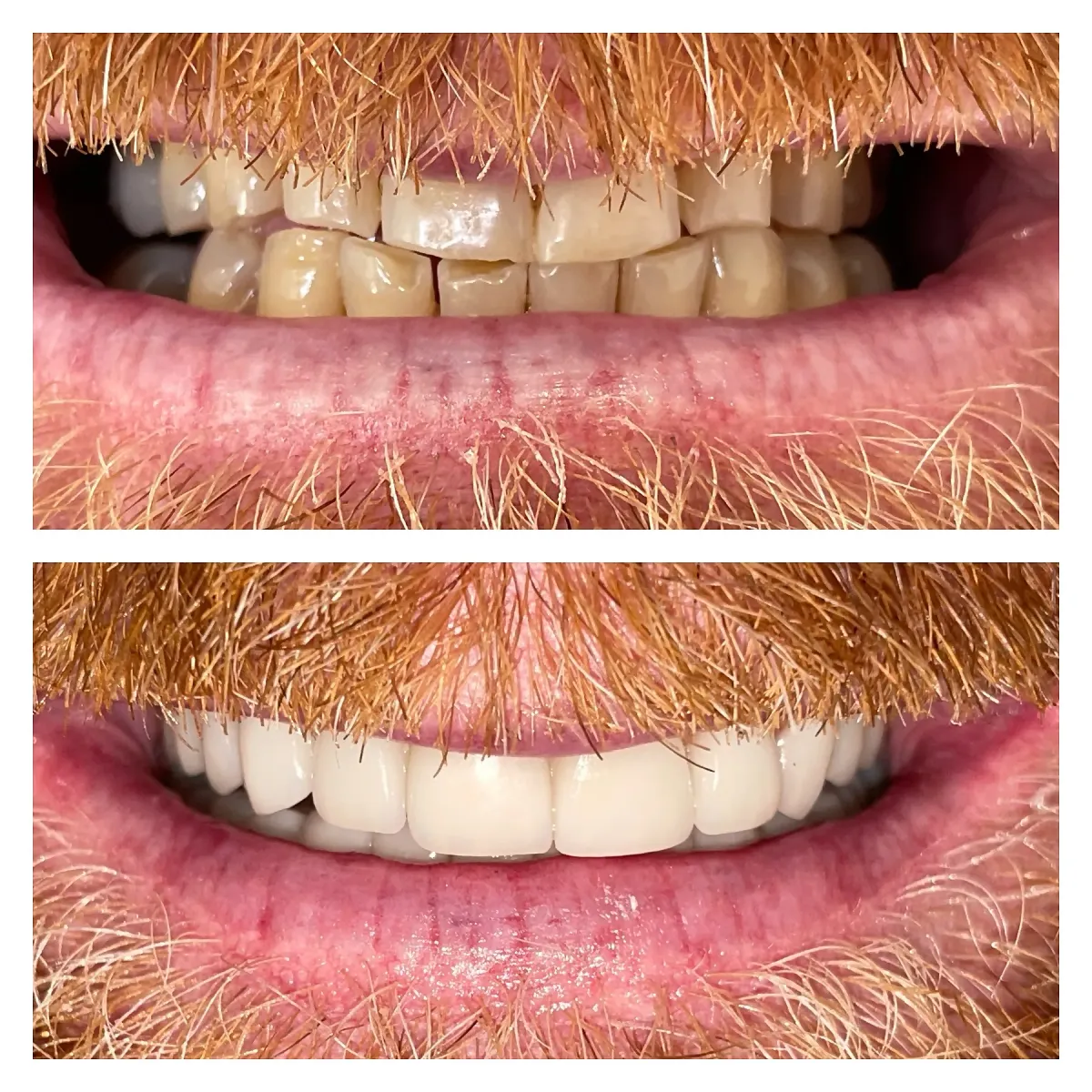
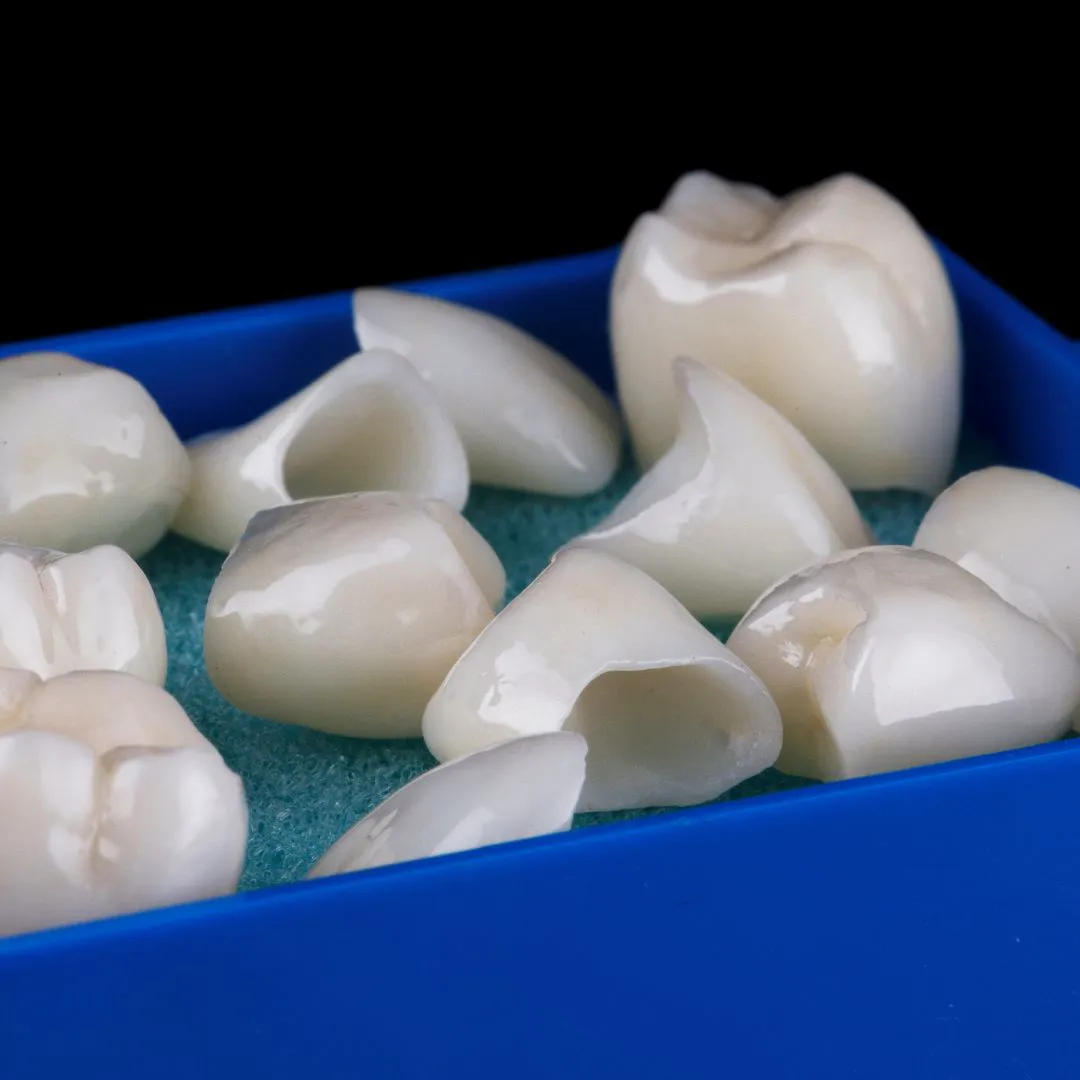

A porcelain crown is a custom ceramic cap that covers a damaged tooth down to the gum line, holding it together and restoring its shape and color. At ConfiDental we place porcelain crowns in Beverly Hills on teeth that are cracked, heavily filled, worn down or weakened after a root canal. We recommend a crown only when a smaller repair will not last, explain which ceramic suits that particular tooth, and give you the cost in writing before treatment.
A good crown should feel like your own tooth within a few days and look like it from the start. The parts that make that happen, the fit at the gum and the way it meets your bite, are where we spend our time.
What is a dental crown?
The American Dental Association describes crowns as caps that restore a tooth’s shape, size and strength. They support large fillings, protect weak or broken teeth, anchor bridges and finish dental implants.
A filling replaces a small part of a tooth. A crown wraps the whole tooth, the way a thimble protects a fingertip, so biting forces are spread evenly instead of prying the remaining walls apart.
Crown, onlay or filling?
We always look for the smallest repair that will last, which may be a filling or a porcelain inlay or onlay rather than a full crown. A dental exam and X-rays show which one fits.
| Your tooth | Usually best | Why |
|---|---|---|
| Small cavity | Tooth-colored filling | Keeps the most natural tooth |
| Medium damage, cusps intact | Porcelain inlay | Stronger than a large filling |
| One or more cusps broken or weak | Porcelain onlay | Covers only the damaged part |
| Large filling, crack, or most of the tooth weakened | Crown | Holds the whole tooth together |
| Back tooth after a root canal | Crown | Root-filled back teeth crack easily |
| Front teeth: color or shape only | Porcelain veneers or bonding | Less tooth removed |
| Missing tooth | Implant crown or bridge | Replaces the tooth itself |
When a crown is needed
- After a root canal, especially on back teeth. See root canal therapy.
- A cracked tooth, to hold the crack together before it splits. A sharp pain when you bite or release is a common sign.
- A large cavity or broken tooth with too little healthy structure for a filling.
- Worn teeth from grinding or acid erosion.
- Old crowns with decay at the edge, a dark line at the gum or a poor fit.
- To finish a dental implant, which we cover on our implant restoration page.
Types of crowns we offer
All-ceramic crowns
Made entirely of tooth-colored ceramic such as lithium disilicate, they transmit light much like enamel. They are our usual choice for front teeth and anywhere the crown shows when you smile. Being metal-free, they do not develop the grey line at the gum that older crowns often do.
Zirconia crowns
A very strong ceramic, well suited to molars and to people who grind. Modern zirconia looks far more natural than early versions, and for most back teeth it is what we recommend.
Porcelain-fused-to-metal crowns
A metal base covered with porcelain. They are strong and cost a little less, but the metal can show as a dark edge if the gum recedes. We use them in specific situations.
Same-day crowns
For suitable single teeth, a ceramic crown can be designed and made in one longer appointment, with no temporary and no second visit. Complex or highly visible front-tooth cases are usually better made by a dental lab.
Porcelain inlays and onlays
Lab-made ceramic pieces that rebuild part of a back tooth. They keep more natural tooth than a full crown when the damage allows.
How we place porcelain crowns in Beverly Hills
- Planning X-rays confirm the root and surrounding bone are healthy. We explain why a crown is the right choice, which material we suggest and what it costs.
- Preparation Under local anesthetic, we remove any decay and shape the tooth to make room for the crown, roughly 1.5 to 2 mm on the surfaces that need it. If a lot of tooth is missing, a core buildup gives the crown something solid to grip.
- Scan and temporary A digital scan of the tooth and your bite goes to the lab, and a temporary crown protects the tooth for the one to two weeks it takes to make the final one.
- Fitting We remove the temporary, try in the new crown, check the fit at the gum, the contacts with neighboring teeth, the color and the bite, then cement or bond it. This visit usually takes 20 to 30 minutes.
If a tooth has broken near or below the gum, there may not be enough tooth showing to hold a crown. Crown lengthening, which reshapes the gum and sometimes bone, exposes more tooth and adds about six to eight weeks of healing before the final crown.
Looking after a temporary crown
- Avoid sticky foods such as caramel and gum, and very hard foods like ice or nuts.
- Chew mainly on the other side.
- Slide floss out sideways rather than pulling it up.
- If it comes off, keep it and call us. Do not leave the tooth uncovered for long.
Comfort and recovery
The tooth is fully numbed during preparation, so you should feel pressure, not pain. Mild sensitivity to temperature or pressure for a few days after each visit is common and settles on its own. Brush and floss as normal from the first day. If your bite feels high, or sensitivity gets worse instead of better after a week, call us; a small adjustment usually fixes it.
How long do crowns last?
Many crowns last 10 to 15 years or longer with good care. To get the most from yours:
- Brush twice a day and floss daily, especially where the crown meets the gum.
- Wear a night guard if you clench or grind.
- Do not chew ice or open packets with your teeth.
- Keep regular checkups so we can catch problems at the edges early.
There are honest limits too. Preparing a tooth removes enamel permanently. A small number of crowned teeth later need a root canal, especially if the tooth was deeply decayed or cracked before. Porcelain can chip, mainly in people who grind.
Porcelain crown cost in Beverly Hills
| Crown type | Approximate cost per crown | Notes |
|---|---|---|
| All-ceramic | $1,200 to $2,000 | Best appearance; preferred for front teeth |
| Zirconia | $1,200 to $2,000 | Best strength; preferred for molars |
| Same-day ceramic crown | $1,200 to $2,000 | One appointment, no temporary |
| Porcelain-fused-to-metal | $900 to $1,500 | Strong; less natural-looking over time |
| Porcelain inlay | $700 to $1,200 | When a full crown is not needed |
| Porcelain onlay | $900 to $1,400 | Covers one or more cusps |
| Crown lengthening (if needed) | $1,000 to $2,500 | Billed separately before the crown |
Most dental plans cover part of a crown placed to repair a damaged tooth, often around 50 percent up to your annual maximum. We check your benefits and give you an itemized, written estimate first. Learn more on our dental insurance page, or ask about CareCredit.
Your dentist
Dr. Liyan Massaband has more than 15 years of restorative experience, including full-mouth restoration. Patients who have had crowns that looked artificial or failed early often notice the difference in how carefully the material and fit are chosen. We see patients from Century City, Beverlywood and across Los Angeles at our Brighton Way office. Call (310) 858-9212 or book a crown consultation online.