
The short answer
Porcelain looks more like natural enamel, keeps its color and typically lasts 10 to 20 years, but it usually means removing a thin layer of enamel, so it is a permanent decision. Composite is sculpted onto the tooth in one visit, often with no drilling, and can usually be redone or removed. It stains and chips more easily and typically lasts 5 to 10 years. For a lasting change to several front teeth, porcelain usually wins. For a small fix, or to try out a shape, composite is often the better start.
We place both at our Brighton Way office and recommend each one regularly. This article is about how they look, how they age and who suits which. If cost is your main question, our guide to veneers cost in Beverly Hills covers prices and financing.
How they look
Porcelain handles light the way enamel does. Light passes a little way into it and reflects back, so the tooth has depth rather than a flat surface. A good ceramist layers in translucency at the biting edge and a fine surface texture, and the glaze keeps its shine for years. Under bright light or a camera flash, well-made porcelain still reads as tooth.
Composite can look excellent when it is freshly polished. It is shaped freehand in the chair from tooth-colored resin, which gives us a lot of control over shape but less depth of color than layered porcelain. Over the years the surface slowly loses its gloss and the edges can pick up stain.
In practice, one or two bonded edges can be close to invisible. A full row of composite veneers is harder to make look as natural as porcelain, and harder to keep looking that way.
How long they last
| Porcelain veneers | Composite veneers | |
|---|---|---|
| Typical lifespan | 10 to 20 years | 5 to 10 years |
| Color over time | Stable | Slowly picks up stain |
| Surface | Keeps its glaze | Needs polishing every so often |
| If it chips | Usually replaced | Often repaired in one visit |
| Main risks | Grinding, biting hard objects, gum recession | Coffee, tea, red wine, smoking, grinding, biting hard objects |
Both kinds fail for much the same reasons: grinding at night, using front teeth as tools and gum problems at the edges. A night guard protects either one if you clench. Our article on maintaining cosmetic dental work covers the daily habits that matter most.
Can veneers be reversed?
This is the biggest difference between the two, and the one people ask about least. Traditional porcelain veneers usually need about 0.3 to 0.7 mm of enamel removed so they sit flush. Enamel does not grow back, so a prepared tooth will always need some kind of covering. Minimal-prep and no-prep porcelain changes that on some teeth, but not on all of them.
Composite can usually be bonded with little or no drilling. If you change your mind, it can often be polished off, leaving the tooth much as it was. That makes composite a reasonable way to test a new length or shape before committing to porcelain, and many of our porcelain patients started exactly that way.
Who suits porcelain veneers
- Several front teeth need a change in color, shape and length together
- Stains that whitening has not shifted, such as grey or banded discoloration
- You want the result to last a decade or more with little upkeep
- Your bite is stable and any grinding is under control
- You are comfortable with a permanent change to your enamel
Who suits composite veneers
- One or two teeth with a chip, a small gap or an uneven edge
- Teens and young adults, where we would rather not remove enamel yet
- You want something reversible, or a trial run of a new shape
- You do not mind polishing and touch-ups every few years
- You would rather keep the first step small
When neither is the right answer
Crowded or rotated teeth usually look better and last longer when they are straightened rather than covered. Our guide to choosing between Invisalign and veneers walks through that choice. A tooth with a large filling or a crack often needs a crown instead, and if color is the only problem, professional teeth whitening may be all you need.
Whichever you choose, insurance usually treats veneers as cosmetic. Our dental insurance and payment options pages explain how coverage and CareCredit work.
How we help you decide
At a consultation, Dr. Liyan Massaband checks your teeth, gums and bite, and we show you a preview of the planned shape before anything is changed. When composite will do the job, we say so. You can read more about our approach on the porcelain veneers page, or book a veneer consultation to talk about your own smile.
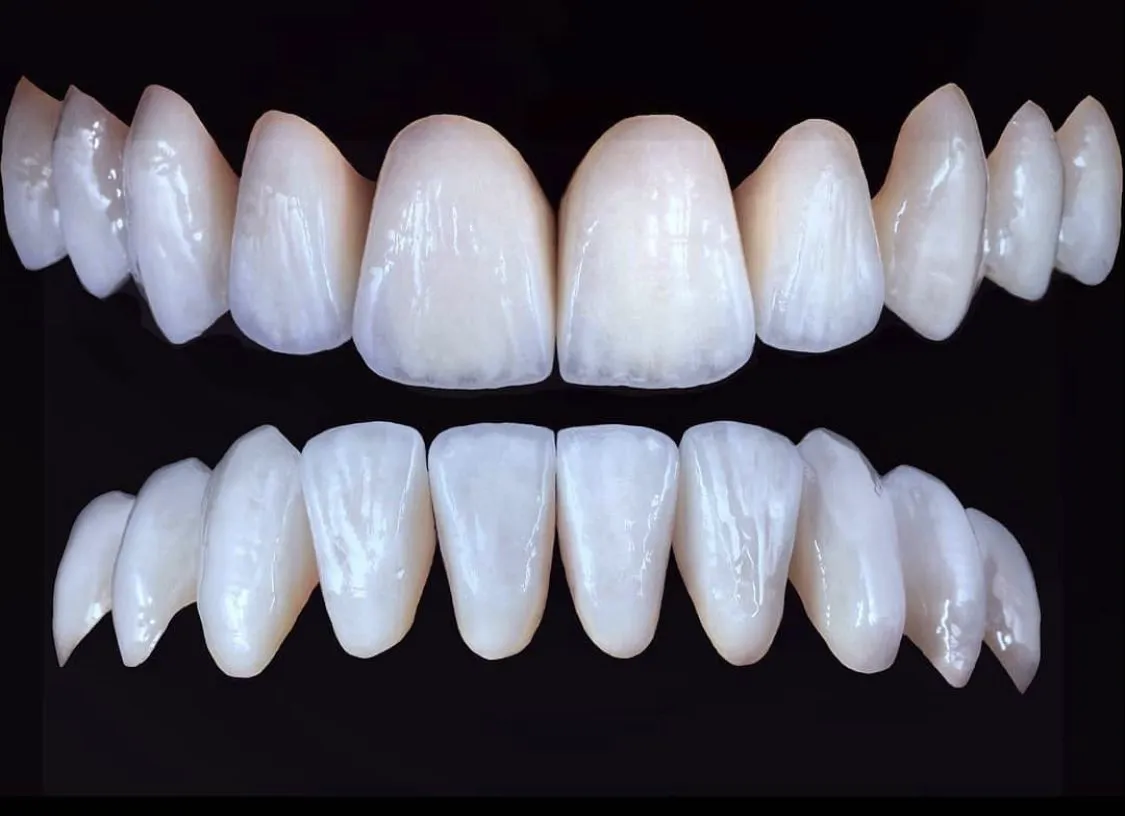 The treatment this relates toPorcelain Veneers in Beverly HillsThin, custom porcelain veneers shaped and shaded to look healthy, never overdone.Read about porcelain veneers
A question about your own teeth? Every mouth is different, and an article can only go so far. Book a consultation at our Brighton Way office or call (310) 858-9212.