
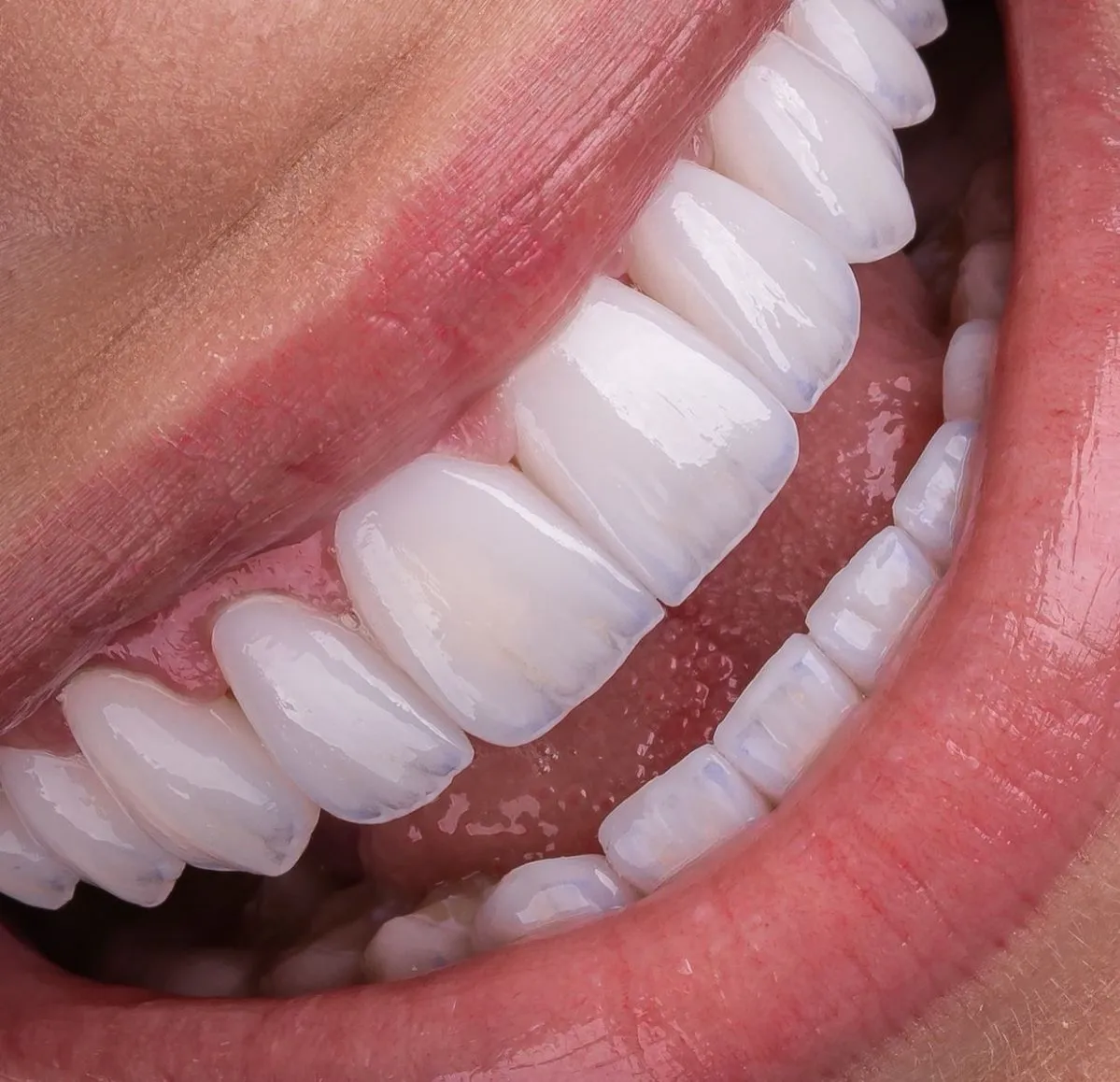

Porcelain veneers at our Brighton Way office typically cost $1,500 to $2,500 per tooth, and composite veneers typically cost $300 to $600 per tooth. Those are the same ranges we give people who call to ask. Your exact fee comes after an exam, once we know how many teeth are involved, how much preparation they need and which material suits your bite.
This page is about money: what moves a veneer fee up or down, what our price covers and how patients pay for it. If you are still deciding whether veneers are right for you at all, start with our porcelain veneers in Beverly Hills page, which explains the treatment itself.
Typical veneer prices per tooth
| Veneer type | Typical cost per tooth | Usually chosen for |
|---|---|---|
| Traditional porcelain veneers | $1,500 to $2,500 | Changes to color, shape and length that need to last |
| Minimal-prep or no-prep porcelain | $1,200 to $2,000 | Small or slightly set-back teeth that mainly need a color change |
| Composite veneers or bonding | $300 to $600 | Small chips and gaps, or trying a shape before porcelain |
| Replacing an old porcelain veneer | $1,500 to $2,500 | Veneers that have chipped, stained at the edge or started to look dated |
Very few people need just one veneer. Here is what typical totals look like for traditional porcelain:
| Number of porcelain veneers | Typical total |
|---|---|
| 2 front teeth | About $3,000 to $5,000 |
| 4 teeth | About $6,000 to $10,000 |
| 6 teeth | About $9,000 to $15,000 |
| 8 teeth | About $12,000 to $20,000 |
Six to eight upper teeth is the most common plan, because that covers every tooth that shows in a full smile. If fewer would do the job, we will tell you.
What drives the cost of veneers
Material
Porcelain veneers are made by a dental laboratory and bonded at a second visit. Composite is sculpted straight onto the tooth in one sitting. The lab work and extra chair time account for most of the gap between the two. Stronger ceramics, which we sometimes suggest for people who grind, sit toward the top of the porcelain range.
Number of teeth
Veneers are priced per tooth, so the total grows with the plan. The harder question is where the veneers should stop. A smile that shows ten teeth when you laugh can look odd with only six covered, and your preview shows that before you commit.
Preparation and groundwork
Traditional veneers need a thin layer of enamel removed. Minimal-prep veneers need little or none, but only suit certain teeth. Some mouths also need work before anything is bonded: a filling, gum treatment, whitening of the neighboring teeth so the shades match, or straightening first so fewer teeth need covering. Our guide to choosing between Invisalign and veneers explains when that last option makes sense. Any groundwork shows up as its own line on your plan.
Temporaries and the trial smile
Between preparation and bonding, you wear temporary veneers shaped like the final design. They protect the prepared teeth and let you live with the new shape for a week or two before the porcelain is made. Getting them right takes time in the chair, and it is one reason a carefully planned case costs more than a rushed one.
The lab and the ceramist
Porcelain veneers are finished by hand. The ceramist builds up color, translucency at the edges and a natural surface texture. A single veneer that has to match the teeth beside it takes the most work of all, which is why one veneer is not simply a sixth of the price of six.
What our veneer fee includes
When you compare quotes, ask what each one covers. Ours includes:
- The consultation exam, photos and scans
- A digital design or trial smile, so you see the shape first
- Preparation of the teeth under local anesthetic
- Temporary veneers while the lab makes yours
- A try-in of the final veneers before they are bonded
- Bonding, bite adjustment and a follow-up visit
What it does not include: treatment your teeth need before veneers, such as fillings or gum care, and whitening of teeth that will not be veneered. If you need any of that, it is itemized and priced separately in your written plan.
Porcelain vs composite veneers: cost and value
| Porcelain veneers | Composite veneers | |
|---|---|---|
| Typical cost per tooth | $1,500 to $2,500 | $300 to $600 |
| Made | In a dental laboratory | By hand, in the chair |
| Visits | 2 to 3 | Usually 1 |
| Typical lifespan | 10 to 20 years | 5 to 10 years |
| Stain resistance | High | Moderate; coffee, tea and red wine show over time |
| If it chips | Usually a new veneer | Often patched in one visit |
| Enamel removed | Usually a thin layer | Little or none |
| Insurance | Usually not covered when cosmetic | Usually not covered when cosmetic |
Composite costs less per tooth, and for one or two teeth it is often the sensible choice. Over twenty years, though, a composite veneer may be polished, patched or redone once or twice, while a porcelain veneer often needs nothing but good care. Our article on porcelain vs composite veneers compares how each one looks and ages, and who suits which.
Does insurance cover veneers?
Usually not. Veneers placed to change color or shape count as cosmetic, and most plans exclude them. If a tooth is also broken or decayed, part of the treatment may be covered as a restoration. We welcome PPO plans from major insurers, including Delta Dental, Aetna, Cigna, MetLife, Guardian, Principal and UnitedHealthcare, and we check your benefits before treatment so you know where you stand. Our dental insurance page explains how PPO coverage generally works.
HSA and FSA cards generally do not cover purely cosmetic work. Your plan administrator makes that call, so ask them if part of your treatment is restorative.
Paying for veneers with CareCredit
Many patients spread the cost with CareCredit, a health care credit card you apply for directly. Approval, terms and any interest are set by CareCredit, not by our office. Our payment options page explains how it works and has a calculator for a rough monthly figure. We also accept major credit cards. If your plan includes groundwork such as whitening or aligners, that part can often come first and the veneers later.
Why the cheapest quote can cost more
A veneer that is too thick, the wrong shade or bonded over an untreated problem tends to need replacing early, and replacement costs about the same as the original. We would rather spend the time on the preview and the try-in than redo work later. If you have veneers from somewhere else that need replacing, the same per-tooth range applies, and removing the old porcelain is part of that fee.
Get a written veneer estimate
Dr. Liyan Massaband has more than 15 years of experience and plans each case around your face, your bite and your budget. Book a veneer consultation or call (310) 858-9212. If you live out of town, a weekend virtual consultation can give you a first opinion and a typical range from photos. Your exact fee comes after an exam.